

Aging in Mexico is advancing rapidly, but the health system and public policies are still not prepared to address its implications, particularly for women.
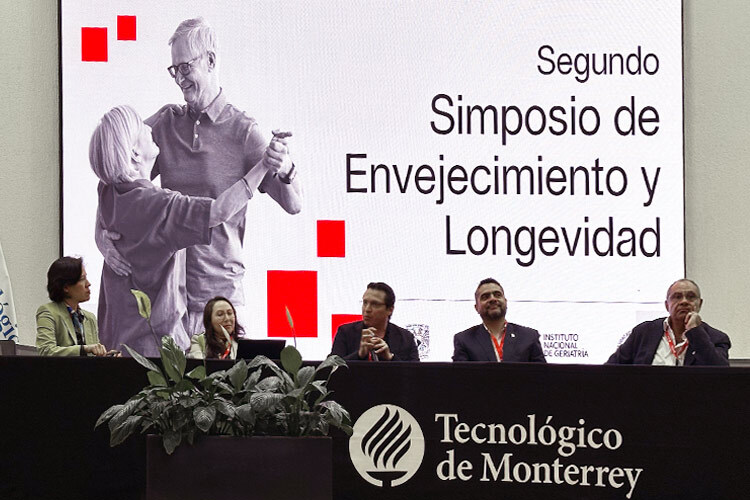
This was one of the central conclusions of the panel Aging in Mexico and challenges in women’s health, held during the Second Symposium on Aging and Longevity, organized by Tec de Monterrey.
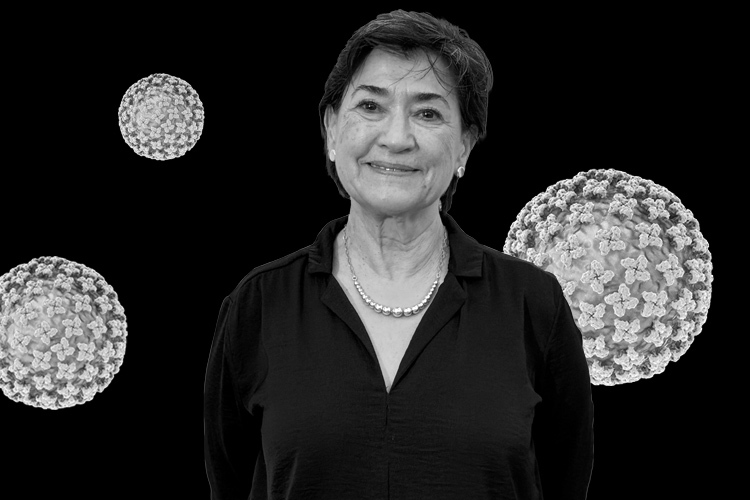
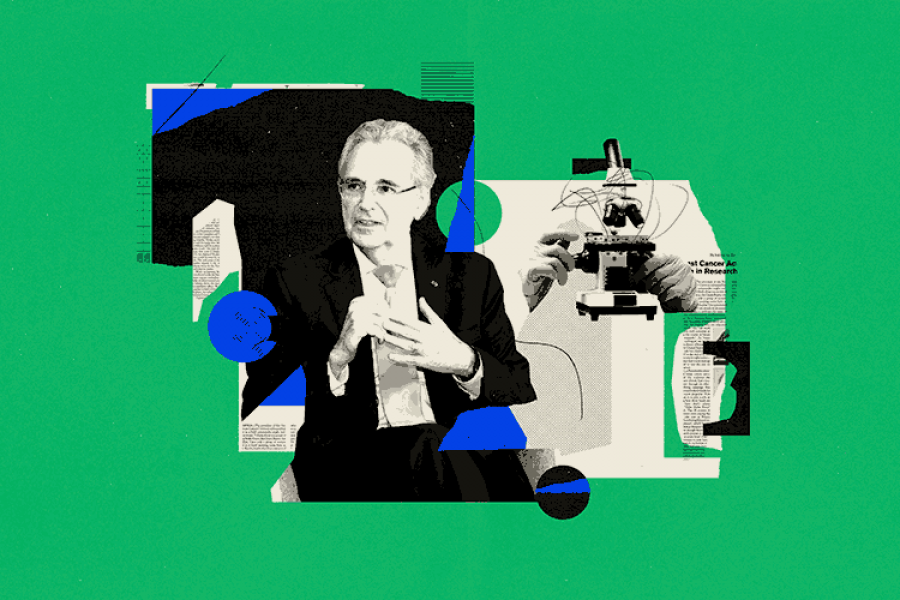
The discussion was moderated by Cristina Chuck, leader of the Health Research Hub at the School of Engineering and Sciences (EIC), and featured Sara Morales, researcher at the Institute of Cellular Physiology at the National Autonomous University of Mexico (UNAM); Raúl Medina, Director of Research at the National Institute of Geriatrics (Inger); Jonathan Magaña, leader of the Aging and Longevity Research Group at EIC; and Sergio Alva, from the Mexican Association of Retirement Assistance (AMAR).
Specialists in neuroscience, geriatrics, bioengineering, and retirement systems agreed that the country faces a multidimensional challenge that goes beyond the clinical sphere.
One of the most forceful diagnoses was that Mexico’s health system is not prepared for population aging—much less for addressing its specific impacts on women.
“As the number of older women continues to grow, Mexico doesn’t need to worry—it needs to act,” said Morales. A lack of infrastructure, a shortage of geriatric specialists, and institutional fragmentation limit adequate care for a rapidly growing population.
This is compounded by a structural issue: a reactive approach. Instead of prioritizing prevention, interventions often arrive when diseases are already advanced. However, experts emphasized that many conditions associated with aging—such as cardiovascular, metabolic, or neurodegenerative diseases—can be prevented up to a decade in advance.
“There is a critical window between ages 35 and 45 in which, if action is taken, the health trajectory of women can be very different,” warned Alva.
Preventing Before Aging
For women, a preventive approach is even more relevant. The transition to menopause was identified as a key window of opportunity for early intervention to reduce future risks in bone, cardiovascular, and cognitive health.
“Menopause goes beyond hot flashes; it implies changes and challenges in the cardiovascular, skeletal, and cognitive systems,” explained Morales.
The panel also highlighted the invisible burden of caregiving. In Mexico, more than 85% of caregivers are women, who take on this responsibility without pay, training, or institutional support. This burden entails physical strain, economic impact, and limitations on professional development, perpetuating gender inequalities.
Although not all older adults require intensive care, a significant proportion will experience functional dependency at some point in their lives. In response, panelists stressed the urgency of moving toward a National Care System that distributes responsibility between the state and families.
“There is a period in which most of us will require care,” said Medina.
From a research perspective, the challenges are also substantial. Women live longer than men, but with poorer quality of life. This translates into a higher prevalence of chronic diseases, musculoskeletal disorders, cognitive decline, and mental health issues such as depression.
“Women have a longer life expectancy, but a lower quality of life,” said Magaña.
The specialists proposed addressing these challenges through a multidisciplinary approach that includes not only health, but also education, urban mobility, and social protection.
“In five years, I would expect progress in the information provided to society about women’s health issues,” Morales said.
In particular, they noted that Latin American cities are not designed for an aging population, and that limited mobility worsens the loss of autonomy.
Living Longer, but not Better: the Economic and Social Challenge of Aging
From an economic standpoint, the outlook is also concerning. The pension system faces growing pressure, while the gap between life expectancy and years lived in good health continues to widen.
It is necessary to find political and social mechanisms to guarantee not only longer lives, but healthier ones.
“I believe it remains a challenge to close the gender gap, reduce violence, and dismantle the machista and patriarchal culture in which we are still immersed,” said Medina.
Looking ahead five years, panelists agreed on the need to shift the paradigm: from treating decline to optimizing health throughout the life course. This involves strengthening health education, promoting gender-focused research, and building collaborative networks across institutions.
The challenge will be to transform a reactive system into one that is preventive, equitable, and centered on the life course, with an emphasis on community and well-being.
“Science has been very clear—the solutions exist, we just need to apply them,” said Alva.