

Just over a year remains until Mexico’s 2027 elections, and the electoral atmosphere is already being felt—not in public squares or traditional rallies, but on TikTok and other social media platforms. On the phone screen, videos, trends, and interactions are shaping political conversation even before the official process begins.
On TikTok, messages are already circulating that anticipate strategies, potential candidates, and partisan narratives. This is happening ahead of an electoral process in which 17 governorships, 2,478 mayoral races, and hundreds of local and federal legislative seats will be at stake. But what role will this social network play in the election?
TikTok as a New Space for Political Conversation
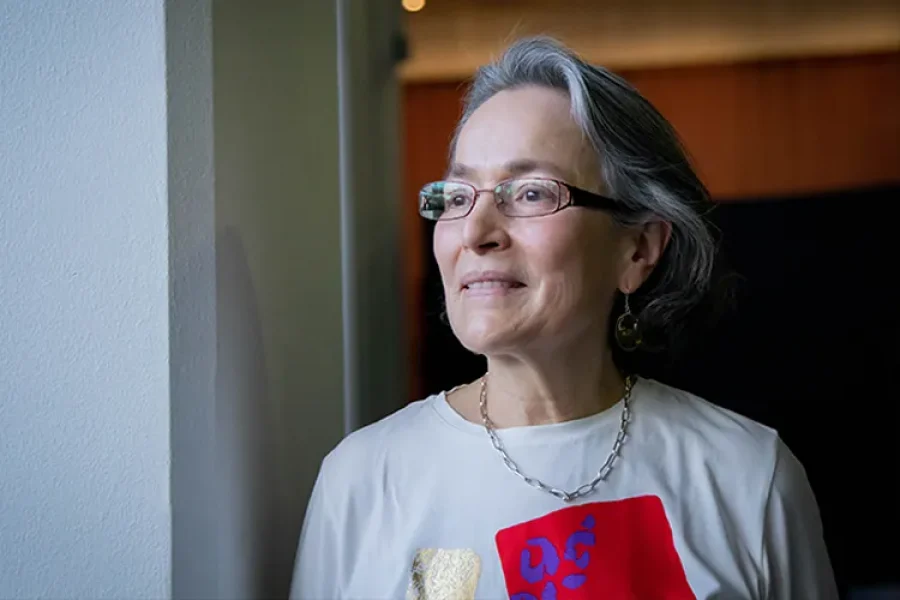
To examine how political conversation is built on this social network, Fernanda Sobrino and Alejandro Díaz Domínguez, researchers at the School of Government and Public Transformation (EGobiernoyTP), conducted a study during Mexico’s 2024 federal elections. They analyzed the types of campaigns candidates implemented, the impact of their messages and content, and the level of interaction or engagement with audiences.
“We wanted to understand what was happening on TikTok, because we knew different dynamics could be taking place there compared to other platforms, both because of the type of users and the algorithm,” says Sobrino, a research professor specialized in data science and political processes.
One of the main differences between this network and others is its user base, made up primarily of people under 30. This segment of the population, although it has shown lower levels of electoral participation, is becoming increasingly relevant in politics as an area of opportunity for upcoming campaigns.
The team sought to understand what was happening with this generation that grew up in digital environments and consumes information differently than previous ones. For young people, this platform is not only a space for entertainment; it is also a source of information where they learn about current events of all kinds.
What the Study Analyzed During the 2024 Elections
As part of the study, the researchers used an automated system that simulates user browsing behavior on TikTok. With this tool, the team collected information from 146 candidacies in 29 state capitals across the country, including Mexico City. Of those, 98 already had an active account on the platform.
“What we did was take all the candidates’ official accounts and several associated hashtags, and from there we conducted a complete sweep of the videos and interactions,” explains the researcher. “The main technology was a scraper, an automated system that extracts public information from TikTok for analysis.”
Using this technique, the team built a database that included more than 7,500 published videos and two million comments generated around that content.
The research analyzed different variables in the videos, such as number of views, likes, comments, and shares, as well as characteristics like duration, type of audio, and whether the content was original or reused. In total, more than 170 variables were evaluated, which made it possible to identify patterns in the way political messages are constructed and spread.
As for the comments, there were around 60 variables. The team analyzed everything from message length, the words used, and emoji usage to user characteristics—such as name, number of followers, and account activity. They also evaluated interaction patterns, such as how frequently users participated, the number of likes, and the timing of their posts.
To classify the tone of the conversation, the researchers used RoBERTuito, an artificial intelligence (AI) model trained in Spanish, capable of identifying positive, negative, or neutral comments.
What the Data Reveals: Interaction Patterns and Coordinated Communities
With this tool, researchers detected audience behaviors and interaction patterns among users. For example, they identified coordinated comment dynamics in favor of or against a candidate, as well as cases in which the conversation appeared to arise organically around a post.
“We found communities of users who comment in a coordinated way. There are candidates where 80 or 90% of the comments come from the same people and within very short periods of time,” says Sobrino. “It’s not necessarily a bot; it could be people organized by campaigns to amplify messages. If you and I comment on the same videos less than 30 seconds apart, that’s suspicious—it no longer looks natural.”
For the researcher, this was the main finding: identifying these types of coordinated interactions at every level, from the largest campaigns, such as presidential races, to smaller ones at the municipal level and, in some cases, involving fewer than 10 identified users.
The study also helped identify the presence and digital strategy of different political forces on TikTok. Although all parties are present, not all use the platform in the same way or with the same intensity. For example, organizations such as the National Action Party (PAN) and Morena had the highest number of posts, followed by Movimiento Ciudadano.
Why Engagement Does Not Guarantee Votes
The researchers also found that within the platform there are different types of candidate profiles. On one hand, they observed figures with previous experience on social media, with influencer-like profiles, who achieved higher levels of engagement, accumulating millions of views and comments on their content. On the other hand, there were profiles with lower digital exposure who only focused on informing or who, despite their efforts, failed to generate a meaningful connection with digital audiences.
In the first case, the researcher cited profiles such as Mariana Rodríguez, who ran for mayor of Monterrey, or Rommel Pacheco, who sought a similar position in Mérida. Both managed organically to get millions of views, likes, and comments on their videos. However, for Sobrino this is another major revelation of the study: TikTok engagement does not necessarily translate into electoral success.
“You can have a lot of engagement, but that doesn’t mean it will translate into votes. There doesn’t seem to be a correlation between how much interaction you have and winning the election,” says the researcher. She also warns that “being on TikTok won’t guarantee anything, but not being there can work slightly against you.”
TikTok Also Creates Closeness with Citizens
The platform was also used by some candidates and parties to promote closeness with citizens and open a direct communication channel, especially at the local level. The professor points to the case of Patricio Zambrano, who ran for mayor in Monterrey and used his profile to livestream himself filling potholes or carrying out community work. In his content, researchers identified messages from users making citizen requests to address problems in their neighborhoods.
“People feel heard; they start using these spaces to say ‘hey, there’s a problem here,’ and that creates a sense of closeness that didn’t exist before. It’s a much more direct interaction—it’s no longer just receiving the message but being able to respond,” says Sobrino. In the end, even though the candidate did not win, he achieved visibility and engagement that likely contributed to the newly created party VIDA NL reaching 3% of the valid vote to maintain its state registration.
Toward the 2027 Elections
Currently, the team is using the database obtained to deepen its analysis of coordinated communities that show bot-like behavior in digital conversation, influencing message visibility and content reach artificially. The goal of this study is to understand how these practices affect electoral conversation in digital environments.
Ahead of the 2027 elections, the study raises new questions about TikTok’s real impact on voting behavior. The next step will be to integrate surveys and comparative analyses to measure whether digital conversation influences—and to what extent—the electoral decision.
Did you find this story interesting? Would you like to publish it? Contact our content editor to learn more: marianaleonm@tec.mx.