
By Diana Laura Pérez, Mariana Martínez, Daniel Guajardo and Marilena Antunes
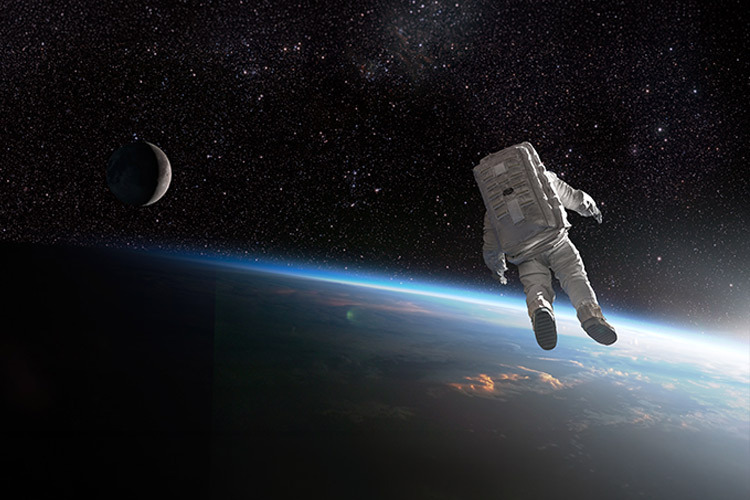
At around 12 kilometers (about 39,000 feet)—where the atmosphere no longer acts as a full shield—flying stops being just a technological challenge and becomes a health issue for both astronauts and commercial airline crews.
What’s happening is that radiation poses a physiological risk to flight personnel, not only from the ultraviolet (UV) exposure we experience at ground level, but also from cosmic radiation: a stream of high-energy particles from space that, at cruising altitude, can more easily penetrate aircraft structures and human tissue.
This process causes damage through reactive oxygen species (ROS), unstable molecules that can harm DNA, trigger mutations, accelerate aging, and lead to cell death.
A common misconception is that standard sunscreens provide sufficient protection in these conditions. While effective for a day at the beach, their active ingredients offer limited defense against radiation from outer space.
Higher altitude, higher risk
As altitude increases, radiation intensity increases. At altitudes of 10–12 km, radiation levels can be up to 150 times higher than at sea level due to reduced atmospheric shielding.
Considering that pilots and cabin crews can log between 800 and 1,500 flight hours a year, organizations such as the International Commission on Radiological Protection classify them as “radiation workers.”
The scale of the risk is far from negligible. The commission sets an average occupational exposure limit of 20 millisieverts (mSv) per year—measuring the amount of radiation absorbed by the body—averaged over five years.
In practice, pilots typically remain below that threshold, but their exposure is still significant. According to the National Council on Radiation Protection and Measurements, they receive an average annual dose of 3.07 mSv—well above that of nuclear power plant workers in the United States, who average around 0.59 mSv.
In other words, a pilot may be exposed to up to five times more radiation than a nuclear plant worker.
Ionizing radiation and cellular damage
At ground level, the atmosphere filters out most high-energy radiation. In flight, that protection weakens, and exposure to cosmic radiation becomes dominant.
This type of radiation includes alpha and beta particles, as well as ionizing radiation—the most biologically significant—so-called because it can alter molecules by stripping away electrons, triggering cellular damage.
Its effects include inflammation, premature skin aging, and DNA strand breaks, which can lead to mutations associated with aggressive cancers such as melanoma.
The data support these concerns: several studies have found that pilots face an 87% higher risk of developing melanoma compared to the general population.
Despite existing regulations—such as dose monitoring in Europe and guidance from the Federal Aviation Administration in the United States—protection remains limited, particularly when it comes to direct skin protection.
Responses from the ground
The challenge now goes beyond conventional sunscreens. Researchers are working to develop next-generation photoprotectors capable of blocking both UV and high-energy radiation.
In this search, one material has begun to draw attention: zeolite.
Zeolites are naturally occurring minerals with a microscopic porous structure that allows them to trap and stabilize different substances. This is why they are used in applications ranging from nuclear waste absorption to agriculture and biotechnology.
A curious fact: zeolite is also an everyday material—commonly used in cat litter. Its effectiveness in that context—absorbing moisture, trapping odors, and retaining compounds—comes from its sponge-like structure at the molecular level.
That same property makes it promising for far more complex uses. Instead of capturing ammonium or odors, as in household applications, zeolites can trap ions, stabilize molecules, and withstand extreme conditions, including radiation-rich environments.
In dermatology, their ability to stabilize molecules has enabled the development of more robust hybrid UV filters. Researchers are now exploring whether these properties can extend to protection against ionizing radiation.
Its high thermal and chemical stability make it a strong candidate for extreme environments such as aerospace. When combined with antioxidant and anti-inflammatory compounds, zeolite-based formulations could lead to ultra-broad-spectrum “sunscreen-like” skin protectants.
This line of research, currently underway at Tecnológico de Monterrey, represents a shift in approach: moving from mitigating radiation’s effects to preventing them directly at the level of the human body.
In context
The project, titled “Analysis of the Impact of High-Energy Solar Radiation on the Health of Aerospace Personnel and the Development of Mitigation Strategies,” is currently funded by Mexico’s Ministry of Science, Humanities, Technology, and Innovation (SECIHTI) under grant CF-2025-G-1818, as part of the 2025 “Basic and Frontier Science” call.
References
- Desmaris G. Cosmic radiation in aviation: radiological protection of Air France aircraft crew. Ann ICRP. 2015;45.
- Lochard J, Bartlett DT, Rühm W, Yasuda H, Bottolier-Depois JF, International Commission on Radiological Protection. Radiological protection from cosmic radiation in aviation. Sage; 2016.
- Toprani SM, Scheibler C, Mordukhovich I, McNeely E, Nagel ZD. Cosmic Ionizing Radiation: A DNA Damaging Agent That May Underly Excess Cancer in Flight Crews. Vol. 25, International Journal of Molecular Sciences. Multidisciplinary Digital Publishing Institute (MDPI); 2024.
- Shikazono N, Nakano T, Akamatsu K, Tsuda M, Tujimoto A, Hirayama R, et al. Formation of clustered DNA damage in vivo upon irradiation with ionizing radiation: Visualization and analysis with atomic force microscopy. Proc Natl Acad Sci U S A. 2022 Mar 29;119(13).
- Michalettou TD, Michalopoulos I, Costes S V., Hellweg CE, Hada M, Georgakilas AG. A meta-analysis of the effects of high-let ionizing radiations in human gene expression. 2021 Feb 1;11(2):1–21.
- Miura K, Olsen CM, Rea S, Marsden J, Green AC. Do airline pilots and cabin crew have raised risks of melanoma and other skin cancers? Systematic review and meta-analysis. Vol. 181, British Journal of Dermatology. Blackwell Publishing Ltd; 2019. p. 55–64.
- Moshoeshoe M, Silas Nadiye-Tabbiruka M, Obuseng V. A Review of the Chemistry, Structure, Properties and Applications of Zeolites. American Journal of Materials Science [Internet]. 2017;2017(5):196–221. Available from: http://journal.sapub.org/materials
- Hedström H, Foreman M, Ekberg C, Ramebäck H. Radon capture with silver exchanged zeolites. Radiochim Acta. 2012 Jun;100(6):395–9.
- Yapislar H, Taskin E, Ozdas S, Akin D, Sonmez E. Counteraction of Apoptotic and Inflammatory Effects of Adriamycin in the Liver Cell Culture by Clinopitolite. Biol Trace Elem Res. 2016 Apr 1;170(2):373–81.
- Confalonieri G, Fantini R, Allasia N, Vezzalini G, Fitch AN, Mino L, et al. Structural evidence of sunscreen enhanced stability in UV filter-Zeolite hybrids. Microporous and Mesoporous Materials. 2022 Oct 1;344:112212.
Authors
Diana Laura Pérez de la Rocha. Doctoral candidate in the PhD Program in Biotechnology at Tecnológico de Monterrey, Monterrey campus. She also holds a degree in Chemical Engineering and has experience in leadership roles within the university’s Aerospace Society.
Mariana Martínez Ávila. Research professor in the Food Security and Nutrition research group at the School of Engineering and Sciences at Tecnológico de Monterrey, Monterrey campus. She is a member of Mexico’s National System of Researchers (Level I).
Daniel Guajardo Flores. Research professor affiliated with the strategic Bioprocesses research group at the School of Engineering and Sciences at Tecnológico de Monterrey, Monterrey campus. He is a member of Mexico’s National System of Researchers (Level II).
Marilena Antunes-Ricardo. Research professor at the Institute for Obesity Research (IOR) at Tecnológico de Monterrey, Monterrey campus. She is a member of Mexico’s National System of Researchers (Level II).