
By Rosa Leonor González Díaz and Danay Carrillo Nieves
The use of edible mushrooms as a complementary ingredient in food production has been the subject of study in recent decades.
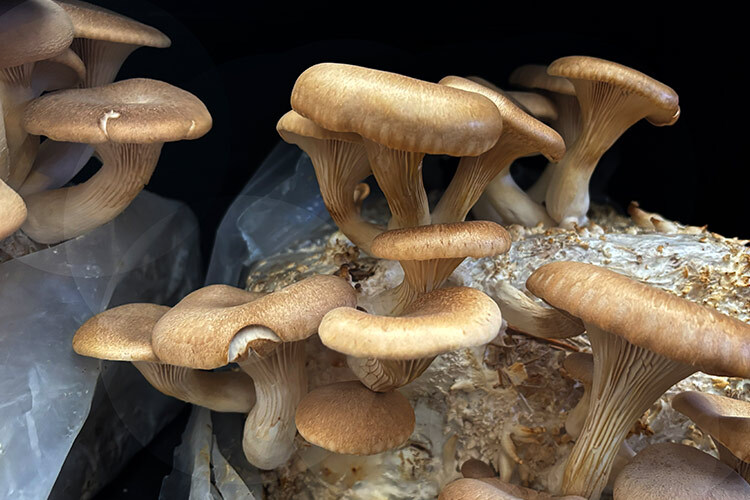
Species such as Pleurotus ostreatus—commonly known as oyster mushroom—stand out for their nutritional value and functional properties, which is why their conversion into flour has attracted interest as an alternative for enriching processed foods, particularly baked products.
The Carrillo Biorefinery Lab at Tecnológico de Monterrey is exploring this application by incorporating Pleurotus ostreatus flour into butter cookies. The goal is to improve the nutritional profile without affecting consumer sensory acceptance.
This adds further value: this mushroom can be cultivated on substrates such as sugarcane bagasse and coffee husks, two agricultural residues that generate the highest volumes each year. The oyster mushroom breaks down this waste and uses it to feed, grow, and transform it into proteins, fiber, minerals, and antioxidants.
A high-value flour
Oyster mushroom flour is obtained from dehydrated mushrooms, a process that preserves their nutritional properties. This makes it an ingredient with the potential to increase the nutritional density of everyday food products.
By partially replacing wheat flour with mushroom flour, the cookies show higher fiber content and more bioactive compounds compared to conventional versions, which are typically high in sugars and low in nutrients.
In addition to its nutritional contribution, P. ostreatus flour has relevant technological properties. Its ability to retain water and provide structure improves the texture of baked goods and helps prevent them from crumbling or drying out easily.
However, one of the main challenges in developing these foods is maintaining consumer acceptance. In this case, sensory tests indicate that mushroom-enriched cookies retain desirable flavor, aroma, and texture characteristics.
From waste to ingredient
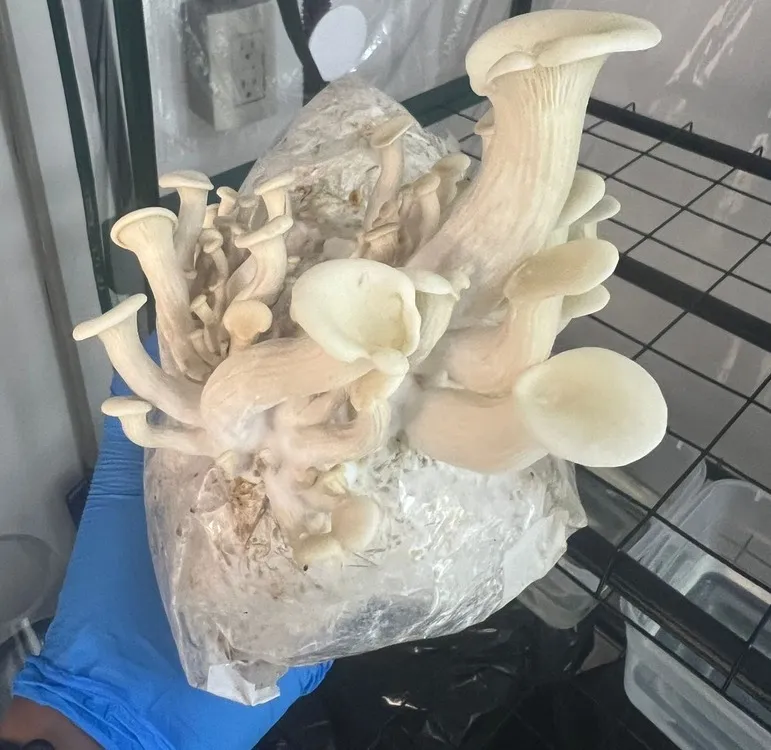
A key aspect of this development lies in the origin of the mushroom and its cultivation substrates, as it can be grown on agro-industrial residues rich in lignin and cellulose, such as sugarcane bagasse and coffee husk. [1]
Bagasse is generated after extracting juice from sugarcane during milling, while coffee husk corresponds to the outer layer of the coffee bean removed during processing. Both by-products are often burned or discarded, despite their potential as biological substrates.
In the sugar industry, the volume of residues is considerable: for every ton of processed sugarcane, between 250 and 300 kilograms of bagasse are produced, with a moisture content close to 50% [3]. Coffee follows a similar pattern: during processing, a large portion of the fruit becomes waste, and for every kilogram of coffee beans obtained, a comparable amount of by-products is generated.
At the Carrillo Biorefinery Lab, the team has demonstrated strong expertise in transforming agro-industrial residues into substrates for value-added food products.
With this proposal to incorporate mushroom flour into butter cookie formulations, a group of Biotechnology Engineering students won first place in the Pitch Battle at the Expo Ingenierías 2025 event at the Guadalajara campus, held during the August–December 2025 semester.
This recognition highlights the importance of engaging students in real research experiences, where they can develop biotechnological solutions that contribute to sustainability, food security, and the responsible use of resources.
References
- R. L. González-Díaz et al., “Valorization of brewer’s spent grains through Ganoderma lucidum cultivation: Functional food ingredients and bread prototypes,” Lwt, vol. 214, no. 117131, pp. 1–8, 2024.
- C. Jácome-Pilco, R. García-Culqui, L. Guevara-Narváez, and T. Moreta-Guangas, “Revalorización del bagazo de caña de azúcar (Saccharum officinarum) como residuo importante para la agroindustria,” Digit. Publ., vol. 8, no. 3, pp. 134–148, 2023.
- S. G. Zarco, R. H. Rodríguez, M. J. Franco, R. González, M. Islas, and E. Pérez, “Evaluation of the Fiber and Phenol Content of Coffee Husk,” Rev. Gestão Soc. e Ambient., vol. 19, no. 3, p. e011736, 2025
Authors
Rosa Leonor González Díaz. Postdoctoral researcher associated with the FODECIJAL 2025 research project. Adjunct professor at the School of Engineering and Sciences at Tecnológico de Monterrey.
Danay Carrillo Nieves. Research professor at Tecnológico de Monterrey, affiliated with the Health for People research group at the School of Engineering and Sciences, and leader of the Carrillo Biorefinery Lab. She is also an author of science communication articles for TecScience.