
By Francisco Javier Serrano and Daniel Martínez
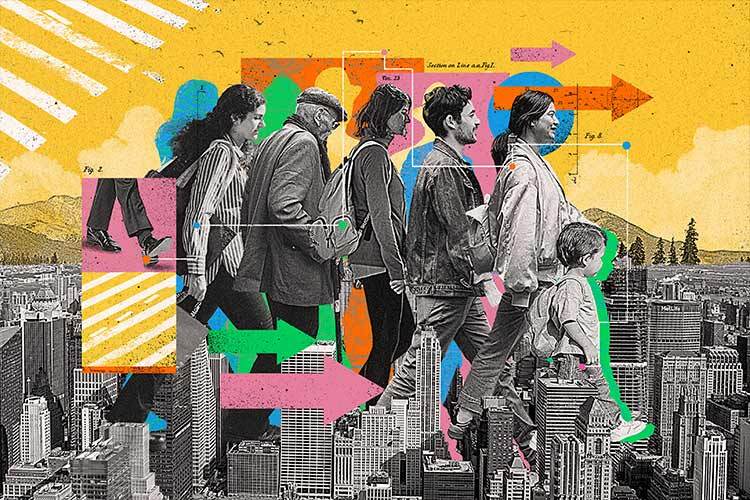
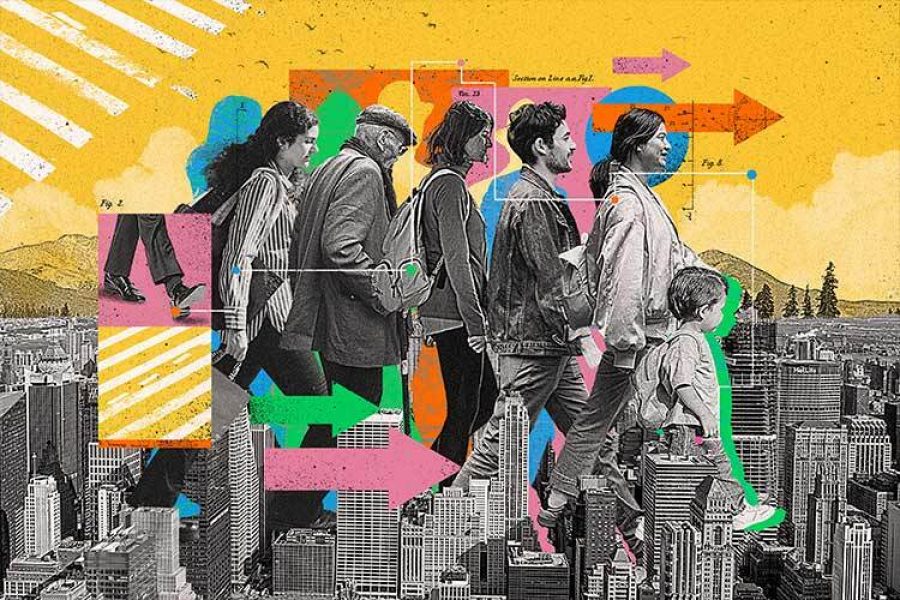
Today, roughly 56% of the world’s population lives in cities, and that figure is expected to rise to 68% by 2050. In an increasingly urban world, urban sustainability is no longer a choice — it has become a global imperative.
Against this backdrop, the bibliometric analysis “Sustainable Cities: A Critical Review of Global Scientific Production and Its Epistemic Asymmetries” examined more than 5,000 academic articles and found that knowledge about sustainable cities is being shaped almost exclusively by the Global North.
Since 2019, research in this field has expanded rapidly, driven in large part by the 2030 Agenda and Sustainable Development Goal 11, which focuses on sustainable cities and communities. The push to generate evidence for public policy design and to measure progress sparked a significant increase in academic publications and research projects.
Yet this growth has been far from balanced. Scientific output is concentrated primarily in countries such as China, the United States, the United Kingdom, and Germany, which not only publish more research but also shape thematic and methodological priorities. By contrast, regions such as Latin America, Sub-Saharan Africa, and South Asia remain underrepresented and have limited influence over the global agenda.
The study also found that funding plays a decisive role. Major agencies in China, the United States, and the European Union not only provide resources but also establish evaluation criteria and priority research areas that determine which topics are studied and how success is measured. As a result, the post-2019 surge in knowledge production reflects both a growing commitment to sustainability and the unequal structure of global scientific research.
High-Tech Visions, Low Social Inclusion
Another key finding of the study was that mapping the body of accumulated knowledge revealed a pronounced “tunnel vision” in contemporary urban science — one heavily skewed toward technological solutions.
Other dominant themes revolve around the environment and climate change, with a strong emphasis on mitigation strategies and green infrastructure. Secondary attention is given to urban planning and development approaches, such as transportation and land use, as well as the Smart Cities agenda, driven by Big Data and sensor technologies.
Meanwhile, crucial dimensions such as education, culture, mental health, and informal economies — all fundamental in regions like Latin America and Africa — are relegated to little more than footnotes.
Despite the relevance of the issues currently under study, urban sustainability cannot be reduced to technological efficiency or environmental governance alone. It requires integrating multiple forms of knowledge and including historically marginalized voices.
For a city to be truly sustainable, it must also be inclusive. Our analysis of recent scientific literature identified critical blind spots that are frequently overlooked in research, despite being essential to understanding what it truly means to build sustainable urban environments for everyone.
- Intersectionality: Perspectives related to gender, age, and ethnic diversity remain largely absent.
- Local realities: Urban poverty and informality receive little attention, despite being defining conditions across much of the world.
- Identity: The relationship between sustainability and cultural heritage is almost entirely missing from the dominant literature.
.
In other words, urban sustainability is being conceptualized without fully considering the people who actually inhabit these cities.
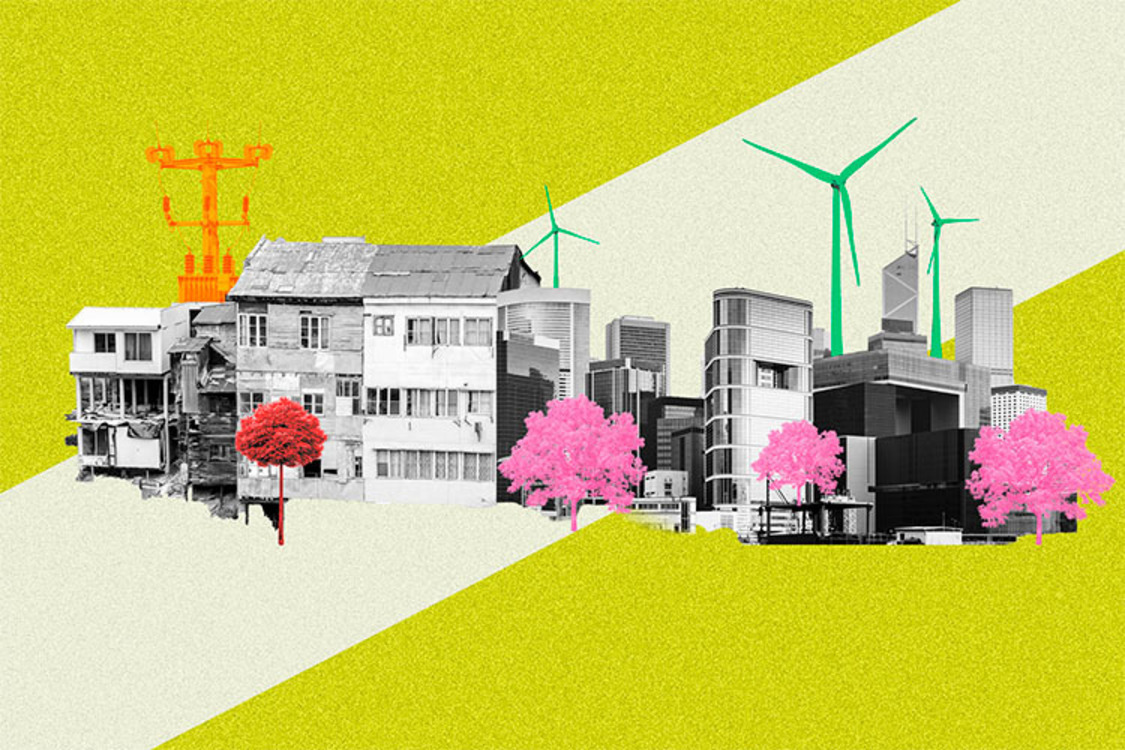
The future of cities cannot depend solely on technical solutions designed in Global North laboratories for the realities of the Global South. Advancing toward a more pluralistic science — one that embraces concepts such as urban justice and social innovation — is increasingly urgent.
The central question is no longer how to build greener buildings, but who gets to define what sustainability means and from which part of the world that vision emerges.
Urban sustainability is not merely a technical challenge; it is also a struggle over who holds the power to shape the future of our cities — and whom those cities are ultimately designed for.
References
- UN-Habitat. (2022). World Cities Report 2022: Envisaging the Future of Cities. United Nations Human Settlements Programme (UN-Habitat).
- Serrano-Bosquet, F. J., & Martínez-Martínez, D. (2025). Ciudades sostenibles: revisión crítica de la producción científica global y sus asimetrías epistémicas. Revista Hábitat Sustentable, 15(2), 76-89.
- Almulhim, A. I., et al. (2024). Charting sustainable urban development through a systematic review of SDG11 research. Nature Cities.
- Pieterse, E. (2011). Grasping the unknowable: coming to grips with African urbanisms. Social Dynamics, 37(1), 5-23.
- Parnell, S., & Oldfield, S. (Eds.). (2014). The Routledge Handbook on Cities of the Global South. Routledge.
- Anguelovski, I., Connolly, J., & Brand, A. L. (2018). From landscapes of utopia to the margins of the green urban life: For whom is the new green city? City, 22(3), 417-436.
.
Authors
Francisco Javier Serrano Bosquet. Ph.D. in Philosophy from Complutense University of Madrid. He is currently a professor at the School of Humanities and Education at Tecnológico de Monterrey, where he specializes in Science, Technology, and Society (STS) studies and applied ethics. He also writes science communication articles for TecScience.
Daniel Martínez Martínez. Professor and director of the Built Environment area at the School of Architecture, Art, and Design at Tecnológico de Monterrey, Monterrey campus.