
By Andrés Bustos Farrera, María Fernanda Rosales de la Cruz, Tomás García Cayuela
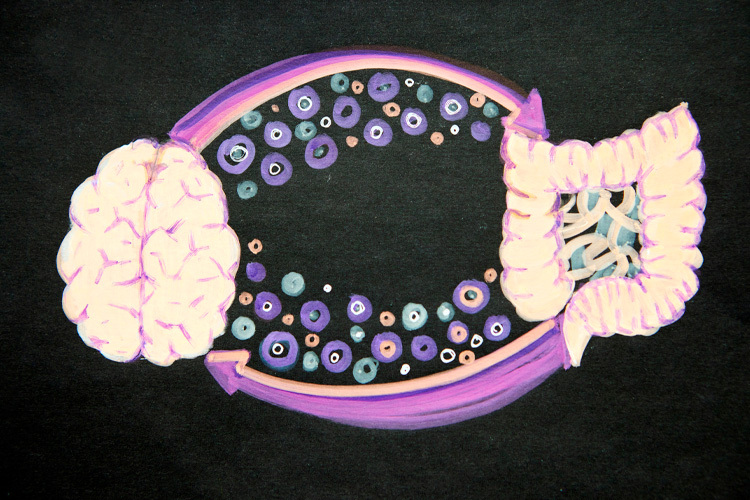
As we age, communication between the digestive and nervous systems begins to shift. The gut microbiota—the community of microorganisms living in the intestine—loses diversity and can fuel chronic, low-grade inflammation, a “silent” process linked to frailty, metabolic disorders, and mental health challenges.
It is important to understand that food is not only a source of energy; it also shapes how we feel and how we age. Researchers are now exploring how diet can help strengthen the dialogue between the gut and the brain across different stages of life.
At the heart of this work are key questions: which microorganisms are most effective, which foods contain them, which populations benefit the most, and under what conditions they work best. This article highlights some relevant findings in older adults.
Nutrition in Later Life
Over time, some people fall short of recommended fruit and vegetable intake—whether because of chewing or digestive challenges, a diminished appetite, or limited access.
Designing foods for this stage of life means going beyond nutritional content and considering essential factors such as soft textures, appealing taste, safety, and ease of consumption.
Fermented preparations—such as drinkable or spoonable products—made from whey (a dairy byproduct rich in bioactive compounds) and fruit offer a practical and accessible option. They are easy to consume and allow the incorporation of ingredients that would otherwise go to waste.
Using discarded fruit and agri-food byproducts to develop formulations with psychobiotic potential is not only an environmental strategy; it is a tangible way to turn waste into value, science into well-being, and circular economy principles into improved quality of life.
Whey as an Ally
At Tecnológico de Monterrey, the Food and Biotech research team has spent several years exploring how biotechnology and fermentation can transform food byproducts into higher-value ingredients.
In previous studies, the team developed fermented beverages from whey (cheese whey) and raspberry byproducts, showing that this combination can remain stable and generate compounds of interest during fermentation [1].
In another study, fermented smoothies made from watermelon and blueberries showed improved microbiological safety and greater availability of functional compounds after digestion [2,3].
These findings raised a new question: if whey and fruit byproducts can be turned into functional foods, why not take it a step further and target mental health in older adults, using discarded fruit?
Building on this work, a new research project is now underway, funded by the 2025 Frontier Science call (SECIHTI) [4]. The goal is to use discarded fruit and byproducts such as whey to create fermented foods that may support well-being and mental health in older adults.
The project combines fermentation processes with digital tools and artificial intelligence to better understand how microorganisms behave and to use that knowledge to design more effective, safe formulations tailored to the needs of older adults.
This research is being conducted in collaboration with the Centro de Investigación Biomédica de Occidente (IMSS-CIBO) and the University of Guadalajara. It includes the evaluation of these formulations in preclinical models of aging, with a focus on processes related to inflammation, cognition, and mood.
References
- Del Toro-Barbosa, M., Uribe-Velázquez, T., Hurtado-Romero, A., Rosales-De la Cruz, M. F., Carrillo-Nieves, D., García-Amezquita, L. E., & García-Cayuela, T. (2025). Evaluation of GABA-Producing Fermented Whey Formulations: From Strain Selection to Raspberry-Enriched Beverages with Psychobiotic Potential. Foods, 14(16), 2762.
- Méndez-Galarraga, M. P., Hurtado-Romero, A., Antunes-Ricardo, M., García-Amezquita, L. E., Pirovani, M. É., Vinderola, G., Van de Velde, F., & García-Cayuela, T. (2025). Enhancing safety and bioactivity of blueberry-watermelon smoothies through combined ultrasound and lactic acid fermentation with potential probiotics. Food Bioscience, 106991.
- Del Toro-Barbosa, M., Hurtado-Romero, A., García-Amezquita, L. E., & García-Cayuela, T. (2020). Psychobiotics: mechanisms of action, evaluation methods, and effectiveness in applications with food products. Nutrients, 12(12), 3896.
- Proyecto CBF-2025-G-1189 “Diseño y validación preclínica de consorcios psicobióticos fermentados en matrices lácteas y vegetales para mejorar la salud mental en adultos mayores”, Convocatoria Ciencia Básica y de Frontera 2025.
Authors
Andrés Eduardo Bustos Farrera. PhD student in Biotechnology at Tecnológico de Monterrey, Guadalajara campus.
María Fernanda Rosales de la Cruz. PhD student in Biotechnology at Tecnológico de Monterrey, Guadalajara campus.
Tomás García-Cayuela. Research professor affiliated with the flagship project Food Security and Nutrition within the Health Research Hub at the School of Engineering and Sciences at Tecnológico de Monterrey, Guadalajara campus.