
By María de la Paz Toldos Romero
Choosing what we buy may seem, at first glance, like an everyday decision with little consequence. But in times of economic uncertainty, those choices take on a different meaning.
In Mexico—where shifts in the global landscape ripple quickly through national markets and daily life—consumption has also become a form of response: a way to protect what is immediate, support communities, and seek stability in a changing environment.
In recent years, the idea of responsible consumption has become almost unavoidable. The climate crisis, growing social pressure on companies, and an increasingly informed consumer have pushed the issue to the center of public debate.
Brands and campaigns urge people to “consume better” and make more conscious choices. In practice, however, these ideas do not always translate easily into action. People want to do the right thing, but they also seek convenience, well-being, and security in an environment that constantly encourages them to consume more.
This raises a key question for consumer behavior research: what actually drives people to adopt more responsible consumption habits—and, in particular, to prefer local brands?
Local Products
For a long time, preference for local brands was explained mainly by economic factors such as price or quality. More recent research in consumer psychology, however, shows that purchasing decisions are also deeply shaped by how people perceive their relationship with their surroundings.
To better understand these dynamics, the Consumer Science and Marketing Strategy Group at Tecnológico de Monterrey conducted two studies using statistical techniques that allow researchers to examine relationships between psychological variables and purchasing behavior simultaneously.
The first study was based on Construal Level Theory, which explains how people evaluate situations depending on how near or distant they perceive their consequences to be.
When something feels close—such as products tied to one’s community or daily life—people tend to process information more concretely and pay greater attention to immediate benefits.
From this perspective, the study analyzed how consumers’ sense of responsibility toward sustainable consumption influences their likelihood of buying local brands. The research was based on a survey of more than 400 Mexican consumers, selected to reflect a range of sociodemographic profiles.
The model also examined variables such as attitudes toward local brands and the social signaling value associated with consuming them—that is, the idea that choosing certain products can communicate values and identity.
It also considered consumer traits such as preference for domestic products and the importance placed on material possessions. The results showed that a stronger sense of responsibility toward sustainable consumption had a positive effect on the likelihood of purchasing local brands (β = 0.163).
Nature and Consumption Decisions
The second study approached responsible consumption from a complementary angle: the relationship between experiences with nature and sustainable purchasing decisions.
This analysis draws on two widely used frameworks in sustainability research—the Theory of Reasoned Action and the Norm Activation Model—which explain how attitudes, personal norms, and a sense of moral responsibility shape consumer decisions.
In this case, data from consumers in two distinct cultural contexts—Mexico and Spain—were analyzed, with more than 800 participants included in the comparative study. The findings showed that enjoyment of nature has a significant effect on consumers’ sense of responsibility toward sustainable consumption (β = 0.391).
In other words, people who report a stronger connection to natural environments tend to feel more responsible for the environmental impact of what they consume.
The comparative analysis also revealed differences between countries. While this relationship appears in both Mexico and Spain, its effect was stronger in Spain. Factors such as greater access to green spaces and more walkable cities may foster more frequent interaction with nature. By contrast, in many Mexican cities, rapid urban growth and unequal access to green areas limit these everyday experiences.
This finding is particularly relevant because it suggests that sustainable behaviors are driven by social norms or environmental awareness, and positive emotional experiences linked to the natural environment.
When Local Carries More Meaning
Taken together, these studies suggest that individual values, people’s relationship to their surroundings, and their perception of consequences shape responsible consumption. When consumers see their decisions as having a direct, local impact—for example, on their community’s economy—they are more likely to act responsibly.
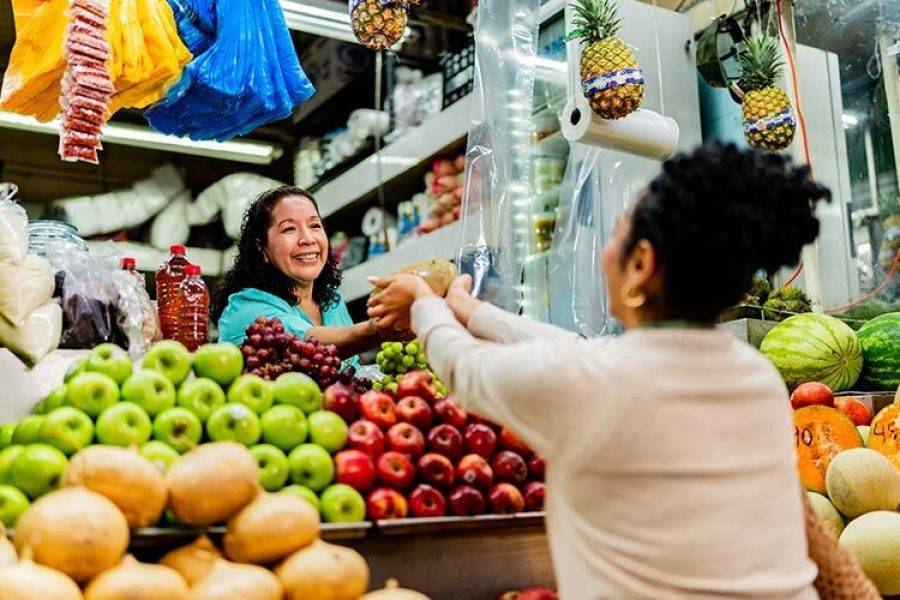
In the current economic climate, the preference for local brands takes on added significance. More than just an ethical or environmental choice, buying local can become a way to strengthen what feels close: community, jobs, and the everyday economy.
For many Mexican consumers, choosing local brands is associated with trust, identification, and personal consistency. These decisions are shaped by economic factors as well as by the opportunity to act in line with one’s values.
The path toward more responsible consumption may not begin with sweeping narratives, but with everyday experiences that make the impact of our choices tangible: a walk in nature, or a conversation with the people who produce what we consume. When sustainability feels close, it stops being an obligation—and becomes a natural part of how we decide.
References
- Toldos, M. P., Rialp-Criado, J., & Agredano, C. (2025). The impact of enjoying nature on sustainable consumption and its influence on local brand preference across cultures. European Business Review.
- Agredano C., Toldos, M.P., & Rialp, J. (2025). Consumer responsibility and local brand preferences in an emerging market: evidence from Mexico. Management Decision, 64(2), 565-588.
Author
María de la Paz Toldos Romero leads the Consumer Science and Marketing Strategy Research Group at the Tecnológico de Monterrey Business School. She holds a PhD in Psychology from the Complutense University of Madrid and completed a postdoctoral fellowship in Marketing at Tulane University. She has been a member of Mexico’s National System of Researchers since 2009 and is also a science communication contributor to TecScience.