

In Latin America, Artificial Intelligence (AI) is no longer a novelty for undergraduate or graduate students, but rather one of the most widely used tools. At least, that is what the AI in Higher Education LATAM Survey 2026 suggests, showing that 92% of students use it regularly and 67% at least weekly.
This was carried out by the Digital Education Council (DEC), an international and independent organization focused on the intersection of education, technology, and skills development.
The survey includes more than 30,000 responses from more than twenty-nine higher education institutions in the region, including Tecnológico de Monterrey, the National Autonomous University of Mexico (UNAM), the Peruvian University of Applied Sciences (UPC) and the Pontifical Catholic University of Chile.
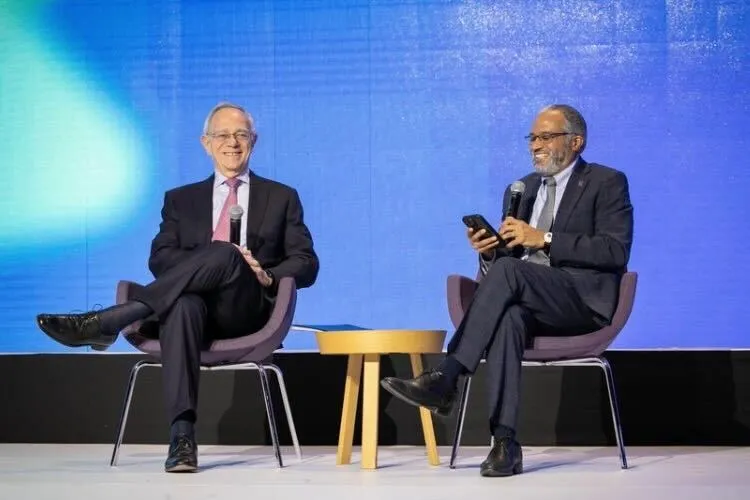
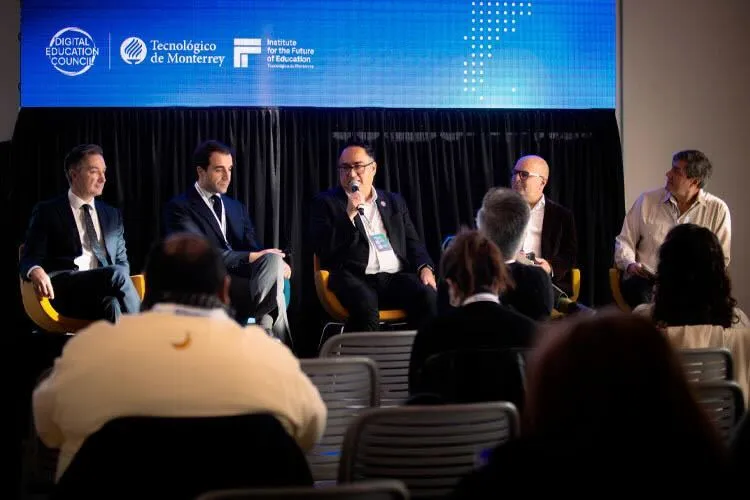
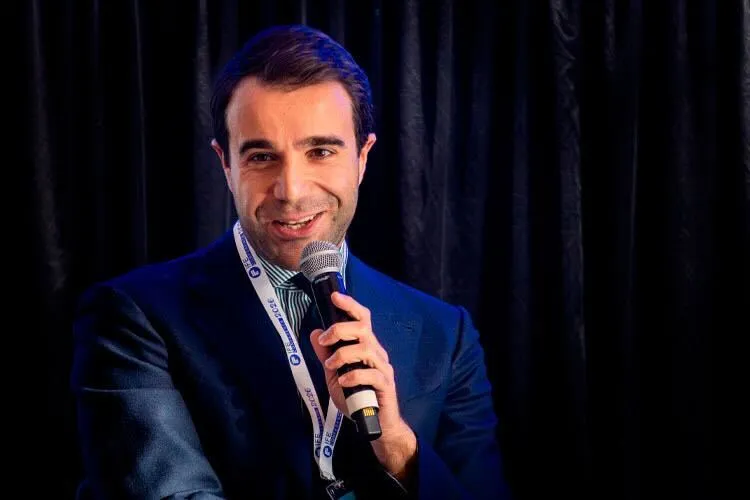
The results were presented during the panel Usage and expectations of AI: Presenting the AI in Higher Education LATAM Survey, which took place during the IFE Conference 2026.
The panel was moderated by Héctor Ceballos, director of the Living Lab and Data Hub at Tec de Monterrey, and participants included Alessandro Di Lullo, executive director at DEC, Danny Bielik, president at DEC, Melchor Sánchez, coordinator of the Coordination of Evaluation, Innovation and Educational Development (CEIDE) at UNAM, and Jorge Bossio from UPC.
According to the results presented by Di Lullo and Bielik, in the region students have adopted these technologies quickly, exceeding the global average of 2024, which showed a usage of 86%.
However, participants discussed that there is still a long way to go before AI can truly improve education at this level. “We are at the beginning of this revolution,” Di Lullo noted.
Use of AI Among Higher Education Students
According to the survey, the AI tools most used by students are ChatGPT in first place, Google Gemini in second place, and Meta AI in third place.
The main use given to them is the search for information, which highlights the gap between use and understanding, since most of these language models are not search engines.
While many use it, 65% fear that it makes their learning more superficial and discourages critical thinking and creativity.

Also, more than half of the students surveyed are concerned about the privacy of their data when using these technologies.
“What we should do is give students and faculty the guidelines, policies and governance infrastructure to give them the confidence to take the next steps,” Bossio said.
Use of AI Among Higher Education Teachers
Regarding teachers, the survey reports a 79% use of AI, compared to 61% globally.
Of that 79%, 88% use it minimally or moderately, reflecting a more cautious approach than that of the students. This is also reflected in the fact that they primarily use it to create teaching materials and streamline administrative tasks.
An unexpected finding was that it did not find a correlation between the age of the teachers and the resistance to using AI.

On the other hand, 70% express great concern about biases and the accuracy of AI information, while 78% are unsure whether students will be able to critically evaluate the results produced by it.
A Structural Gap for the Use of AI in Education
The results suggest that, although there is great enthusiasm and willingness in the region to use AI in higher education, there is a structural gap that still does not allow for its optimal use.
Students seem to be adopting these technologies quickly, while institutions are falling behind.
“Only 30% of universities in Latin America have published policies on how to use AI,” Bossio noted.
He also pointed out that the UPC has a community of more than seven hundred teachers who participate in weekly meetings to train themselves in the use of these technologies, as well as to share their successes, failures and advice.
At UNAM, there is a specific project to understand AI in education in which professors from different areas of knowledge participate, such as philosophers, geographers, architects, engineers, physicists and more.
“We have created a lot of materials useful for teachers,” said Sánchez.

Barriers to the Use of AI in Education
The barriers that stop the use of AI in higher education being close to ideal are mainly cultural.
One example is the constant fear that its use won’t be perfect and that failures will occur. “In every innovation it’s impossible that everything is successful,” Di Lullo said, advocating for a culture of trial and error that accepts failures while protecting students.
The second barrier is that teacher training has focused too much on technicalities and not enough on pedagogy. Teachers don’t need to become data scientists, but rather understand what AI means for education, how to guide their students in using it ethically and strategically, and how to integrate it into their own teaching practice.
Some universities in Australia and Paris are looking to restrict the use of cell phones in schools, due to growing concerns about technology use among students.
“We have to be cognizant that Big Tech companies are not the sisters of charity,” Sánchez said. “Education is in disadvantage with them”
For him, the increasing pressure to use AI immediately after updates or new programs are released can result in misuse.
However, the answer isn’t prohibition either. “It’s better to teach them how to use it; that’s the next step that we must follow at universities,” Ceballos said.
The survey makes it clear that several steps still need to be taken to ensure that AI contributes to education and does not harm students and teachers.
“In Mexico, we always complain that we do not have local evidence,” Sánchez said. “Well, here it is; let’s read it, use it, internalize it, and take action.”
Did you find this story interesting? Would you like to publish it? Contact our content editor to learn more: marianaleonm@tec.mx