
Can an algorithm predict the world champion? Science does not seek to “take away the magic” from football, but rather to explain why certain nations consistently achieve better results. In this sense, statistical models help us distinguish between randomness and probability.
Football has been poetically described as “the most beautiful game in the world” by sports commentator Luis Omar Tapia and as “the game of irrational passions” by writer Juan Villoro. From a purely pragmatic perspective, former footballer Gary Lineker once joked after an elimination: “Football is a simple game: 22 men chase a ball for 90 minutes and at the end, the Germans always win.”
Now, with 48 national teams, the FIFA World Cup is more unpredictable than ever. However, data science and economics offer a fascinating perspective to analyze it—not as a series of isolated matches, but as a dynamic system shaped by social, economic, and sporting variables.
The science of prediction
At the Department of Economics of Tecnológico de Monterrey’s Puebla Campus, we developed a model to decode the probabilities behind different outcomes. To do so, we use a methodology in which economic models interact with data and mathematical relationships within a Complex Adaptive System (CAS) framework, allowing us to estimate scenarios in which uncertainty is high and outcomes depend on social interactions among multiple actors.
Starting from a Power Index (PI), similar in logic to the rankings used to rate football players and teams in video games, this simulation algorithm weighs not only sporting performance but also cultural, economic, and social factors such as:
- Historical and current football performance;
- Team cooperation and stability;
- The economic capacity supporting each federation’s infrastructure;
- The impact of sporting culture on talent development and innovation.
Using these parameters, the model simulates matches while introducing a random component to account for the possibility of non-deterministic outcomes (that is, results based solely on the data).
Who dominates the pitch?
After running thousands of scenarios, clear patterns emerge that challenge the intuition of the average fan. However, expanding the tournament to 48 teams is not just a format change; it is a condition that alters probabilities.
In this context, France emerges as the favorite, with a 20.62% probability of winning the championship. It is followed closely by Germany (12.47%) and England (12.36%). These teams do not rely solely on individual stars, but on an economic, social, and cultural structure that the model highly rewards.
The most frequently projected finals (although with very low probability) are Germany vs. France (3.86%), the golden final often favored by betting markets, Spain vs. France (3.55%), and France vs. England (3.07%).
These results tell us something fundamental: success in World Cups is linked to the statistical convergence of the best-structured teams and to countries with stronger economic foundations for long-term sporting development.
Mexico through the lens of reality
The analysis of the Mexican national team is revealing and measured. With an attribute vector that balances social, economic, and sporting capabilities, the model assigns Mexico a championship probability of only 1.00%.
This result is partly explained by history. Official FIFA data indicates that, through the conclusion of Qatar 2022, Mexico had played 60 World Cup matches, recording 17 wins, 15 draws, and 28 losses. From a frequentist perspective, Mexico wins only 28.33% of its matches.
The team’s glass ceiling is the knockout stage. The model estimates that Mexico will play 4.51 matches, meaning it would advance from the group stage, play the following match, and—in a simplified interpretation—have a 51% chance of reaching the “fifth game,” but not beyond that.
Beyond sporting and social factors, the current competition system adds another natural filter. While global football powers use squad depth to withstand fatigue and rotations, mid-level teams such as Mexico face challenges due to inconsistent player performance and limitations in collective coordination.
Science vs. sport?
When a team creates an upset, science allows us to analyze whether it was an isolated statistical event or a structural failure by the favored team. Comparing model probabilities helps separate emotional factors or the “weight of the jersey,” recognizing that modern football is no longer only about tactics or talent—it is also about resource management, geopolitics, and economics.
In conclusion, while heart and talent determine decisive moments, statistics and economics define the trends. In an increasingly open and complex World Cup, the true competitive advantage lies in understanding the numbers, probabilities, and logic that silently shape nations’ destinies on the pitch long before the ball rolls.
Author
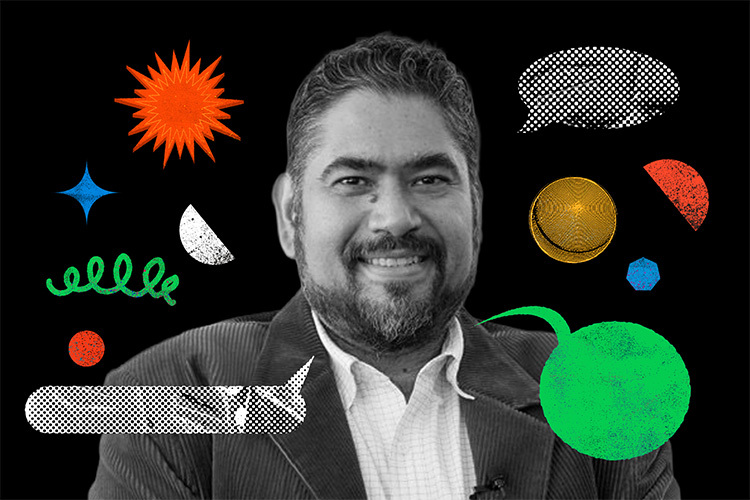
Ignacio Ibarra López is a professor at the Department of Economics within the School of Social Sciences and Government at Tecnológico de Monterrey. He holds a PhD in Economics from Universidad de las Américas. He is a mentor in the Reach Alliance initiative of Tecnológico de Monterrey and the University of Toronto, and a researcher at the FAIR Research Center. His areas of expertise include economics, artificial intelligence, and data science, with scientific publications in international peer-reviewed journals on public policy evaluation models, tax reform analysis, and fraud detection models in electoral processes.