

Securing a patent might seem like the final step after years of research, but in reality, it’s only the beginning of the journey toward making a real-world impact. From that point on, the process of technology transfer begins, aiming to turn knowledge into tangible applications that can reach the marketplace.

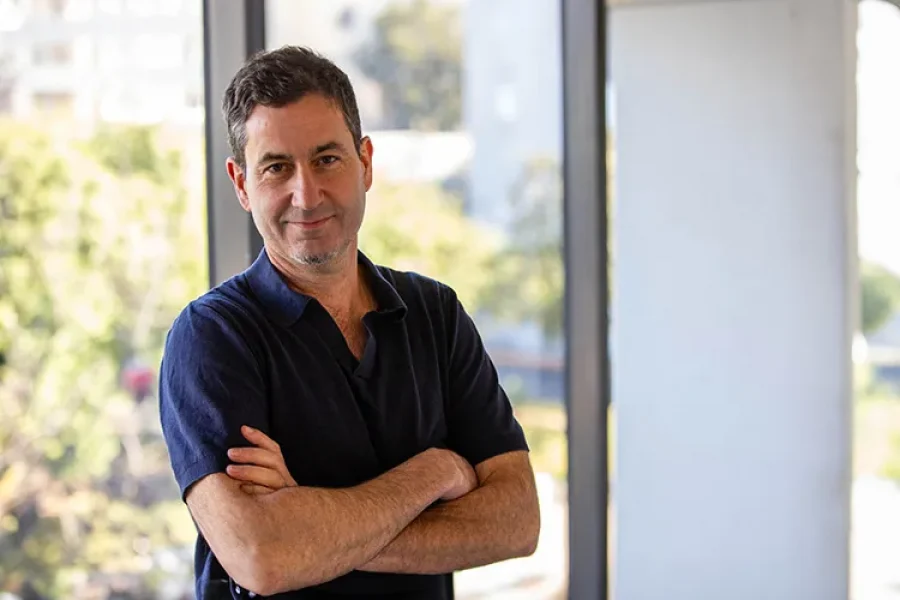
Joel Cano, director of Technology Transfer at Tecnológico de Monterrey, explains that while a patent helps protect the knowledge generated in the lab and grants rights over its use, it does not determine how that knowledge will be applied or in which contexts it will deliver the greatest value.
“The patent is just the first step in a journey that must be approached from both a scientific and technological perspective,” Cano says. A patent gives you the right to use that technology, but the work of developing its applications still lies ahead.
From One Patent to Multiple Applications
Once the Mexican Institute of Industrial Property (IMPI) grants a patent, the next step for researchers is to determine the scope of their innovation and what can actually be done with it. A single invention can give rise to multiple applications across different solutions and industries, depending on how it is developed.
For example, Cano notes that a patent for a chaotic printing device developed by researchers at the Álvarez-Trujillo Lab is being used by Forma Foods, a science- and technology-based company from Tec focused on innovating in the food industry. At the same time, it also holds promise for the healthcare sector, with the potential to print tumors that could be used to test treatments in the lab rather than on patients.
“Just as we can print meat from plant-based proteins for consumption, we can also print tumors to test drugs; it’s the same technology with entirely different applications,” Cano explains.
He adds that, in this sense, researchers must ask themselves—and carefully explore—which applications may hold the greatest value or appeal in a specific market. Even after this analysis, a patent can serve as a technological platform for the emergence of innovations that may also be patented.
Market Validation and Impact
The director points out that once potential applications have been identified, the next step is to seek out prospective customers to work with. This can involve business-to-business (B2B) or business-to-consumer (B2C) models to determine whether the patented technology actually addresses a specific market need.
“You have to step outside the lab, patent in hand and fully protected, and start building partnerships or business opportunities with potential clients. For instance, in a B2B model, you identify which companies could use that particular technology and, from there, develop partnerships and carry out validation,” Cano says.
Throughout this validation process, a range of criteria is used to assess the technology’s potential. At Tecnológico de Monterrey, for example, two types of metrics are applied:
- Market metrics: to determine whether there is demand, whether it addresses a real need, and whether it has commercial viability.
- Impact metrics: to evaluate whether it solves a meaningful problem—such as in health, the environment, or manufacturing—and delivers benefits beyond the marketplace.
“At Tec, we classify innovations based on whether they’ve been identified through a commercial or economic mechanism, or through an impact-driven one, and we organize them according to those market needs,” he explains.
“That need might come from a specific industry or company, but it can also reflect an impact on a particular sector of the country. In healthcare, for example, we look at issues like obesity, which we’ve identified through an institute that analyzes the effects of this problem. In those cases, we say: ‘This has commercial value, but also significant social or health value,’ and we classify it accordingly.”
Prototypes and Minimum Viable Products
After the validation process, the next step is to develop versions of the technology that can be tested under real-world-like conditions—in other words, to create prototypes or minimum viable products (MVPs) that can be evaluated using agile models, which are methodologies designed for rapid testing and iteration with minimal resources.
Two additional dimensions are also considered to track the evolution of the technology and determine how close it is to reaching the market:
- Technology Readiness Level (TRL): Measures technical maturity, ranging from early laboratory testing to a fully functional application ready for use in real-world conditions.
- Innovation Readiness Level (IRL): Assesses how prepared the surrounding environment is to adopt the innovation, taking into account factors such as regulation, demand, and implementation feasibility.
Licensing or Spin-Off: Two Paths to Market
Once a technology has reached a significant level of development, decisions must be made about how it will make its way into the marketplace. One option is to license the technology to an existing company; another is to launch a new venture, such as a spin-off—essentially, a company born out of the research itself.
Cano explains that this is ultimately a business decision, shaped by factors such as market size, risk, and the amount of capital required to scale the innovation.
“This is where you start to say, ‘Okay, maybe the original idea comes from a group of researchers, and then it connects with entrepreneurs who can raise capital and move it into the next phase.’ But in later stages, you might need investment from an established industry—like pharmaceuticals—and the project, now a startup, may require multimillion-dollar funding to scale globally. At that point, you may need to look for a buyer.”
Scaling Requires Investment and Partners
That wouldn’t mean a bad business decision, Cano notes; on the contrary, it would reflect a clear understanding of the scale of investment and opportunity involved—one that must grow geometrically rather than linearly. The funding required for a technology to advance through each stage spans everything from early startup levels to global scale, often culminating in the transfer of the technology to a multinational company.
Along this path, researchers must navigate multiple stages of investment, ranging from early and seed capital—where academic institutions like Tec can play a role—to more advanced rounds such as Series A, B, or C. These later stages typically involve venture capital funds and companies looking to acquire mature technologies with strong market potential.
Tec’s Technology Transfer Ecosystem
At Tec, researchers are supported throughout the entire innovation journey through the infrastructure and tools provided by its Innovation Districts, the Technology Transfer Office, and the Eugenio Garza Lagüera Institute for Entrepreneurship.
Cano notes that the lifespan of a patent depends on the technology and the type of protection, but it can extend to 20 or even 30 years. Along this path, researchers may reap financial benefits not only as inventors but also as entrepreneurs if they take on a role within a startup. At the same time, he emphasizes that this is ongoing work, requiring continuous investment in research and development.
“It ends up being something like a Lego structure; the first patent is the foundation of a figure, but you keep building additional components that can become future assets for a new company, which in turn can invest in R&D to create new and additional technologies that may have nothing to do with the original patent,” he explains.
For Cano, the success of a patent goes beyond protecting a technology—it lies in its ability to solve real-world problems. The key is for the innovation to find its market or impact niche, enabling a growth strategy rooted in meeting needs and integrating with other disciplines and emerging technologies, such as artificial intelligence.
Did you find this story interesting? Would you like to publish it? Contact our content editor for more information: marianaleonm@tec.mx