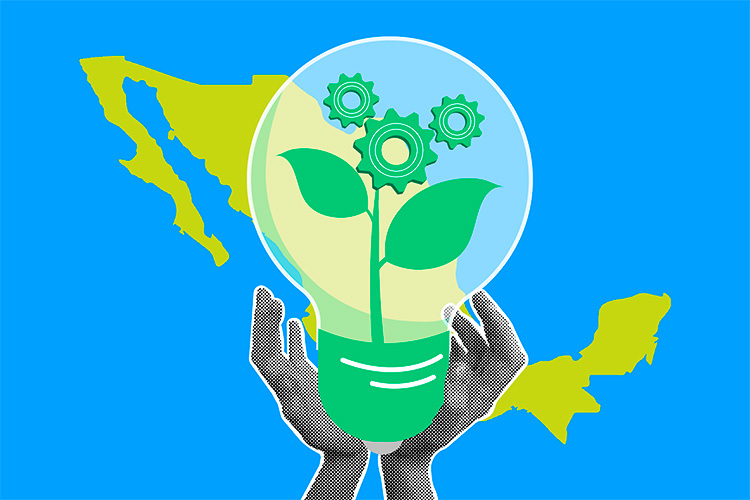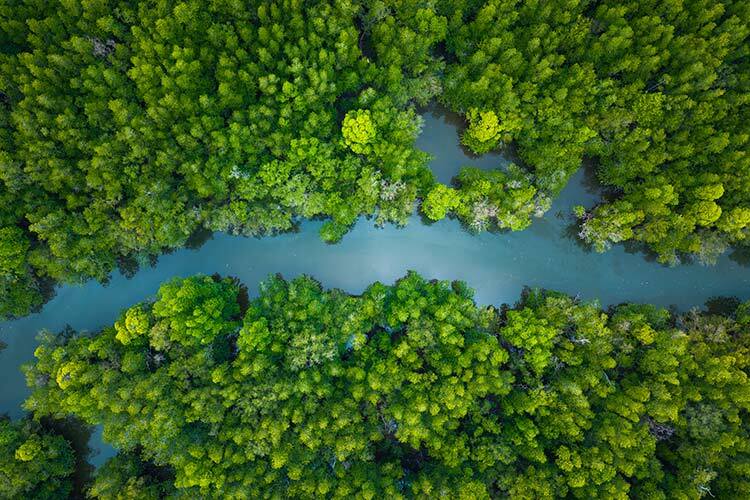


A participatory design project brought together the voices of local people from Bahía de Banderas, in Jalisco and Nayarit, Mexico, to reflect on the conservation of the mangrove, a fundamental ecosystem that protects coasts from storms, floods and erosion.
Unlike more traditional initiatives, one of the main ideas behind Guardians of the Mangrove was to ask the question of how to involve communities in the care of this ecosystem without thinking only about the benefits it provides to humans.
One of the activities consisted of a role-playing game, in which the people involved thought about the mangrove from the perspective of a crocodile, a fish, a bird, or even a tree.
The project was a collaboration between Casandra Díaz and David Sánchez from the School of Architecture, Art and Design (EAAD) of Tecnológico de Monterrey and Cristina Cortés from the Laboratory of Limnology and Tropical Ecology of the Autonomous University of the State of Quintana Roo.
Mangroves are important because they store carbon, protect coastlines, and provide refuge for numerous species of animals, plants, algae, fungi, and microorganisms. However, they face several challenges globally.
Between 2000 and 2020, the world lost approximately 1.9% of its mangrove area. In Banderas Bay, urban and tourism growth has led to habitat loss, pollution, and hydrological alterations—pressures that threaten the ecosystem, as well as the non-human species and communities that depend on it.
“Given this situation, we asked ourselves, how can we get communities to really get involved in safeguarding the mangrove?” recalls Sánchez.
Protecting a Vital Ecosystem Trough Design
To explore how to foster the conservation of this ecosystem, researchers created a multi-species, speculative participatory design activity presented at the 19th Participatory Design Conference, held in Milan, Italy.
First, the participants connected remotely from Mexico and Milan to begin a role-playing game. Each person received a character, which could be human—for example, a fisherman—or a mangrove species, such as a crab. For approximately 40 minutes, they had to make decisions within a simulated ecosystem and observe how their actions affected the other inhabitants.
The intention was for participants to experience the interdependent relationships that exist in these ecosystems and how a decision that benefits one species can have consequences for another.
Afterward, the group worked on the collective creation of a digital mural that would function as a living archive of the experiences, reflections, and proposals that arose during the activity and that could later become a physical installation in Banderas Bay.
The workshop drew about 15 people, including community members, teachers, and staff from the El Cora crocodile sanctuary, as well as participants who joined remotely. Together, they conceptually designed the mural.
“Some of the people who participated see the mangrove and the problems there every day,” Sanchez points out. “They see the crocodiles being hunted and killed by construction companies or even by the community itself.”
Although the project did not focus on crocodiles, they were an example of non-human species that could be represented within the dynamic.
From Designing a Mural to Taking Action
Rather than providing the community with a pre-designed solution, the goal was for its members to help decide what the mural should represent, what problems should be made visible, and how it could be used.
During the exercise, they identified species relevant to the region, including crocodiles, fish, birds, and jaguars, as well as the threats they face. They also discussed how people could coexist with the other species in the ecosystem.
The project does not yet allow us to conclude that the workshop has produced permanent changes in conservation practices in the area. However, the educational materials used during the workshop have begun to be reused in activities at the sanctuary with communities and schools. For the researchers, this represents an initial indication that the dynamic may continue beyond the original workshop.
Thus, the proposal seeks not only to teach about biodiversity but also to raise awareness about all the organisms that are part of the mangrove and how they are all interconnected, which could encourage coordinated actions to protect it.
“The idea was precisely to become guardians, protectors of spaces like mangroves, forests or deserts, because there is life everywhere,” Sánchez concludes.
The project invited participants to recognize that these places contain many forms of life that often go unnoticed and to develop empathy towards them.
In this way, design becomes a tool to listen to those other voices, imagine shared futures, and begin to build different forms of coexistence.
Did you find this story interesting? Would you like to publish it? Contact our content editor to learn more: marianaleonm@tec.mx