

A recent study developed a methodology to identify the areas where the systems of water collecting would have the greatest potential to decrease water demand and mitigate flooding.
Rainwater harvesting could become one of the best tools to supply the water needs of Mexican cities and reduce the probability of future crises.
The research focused on the La Silla River basin, in the southern part of the Monterrey metropolitan area, a region that in recent years has experienced severe droughts, accelerated urban growth, and extreme rainfall events associated with climate change.
In response to these crises, governments in different states usually just encourage reduced consumption and expanding conventional infrastructure, such as aqueducts and wells, but they rarely use alternative strategies, despite their great potential.
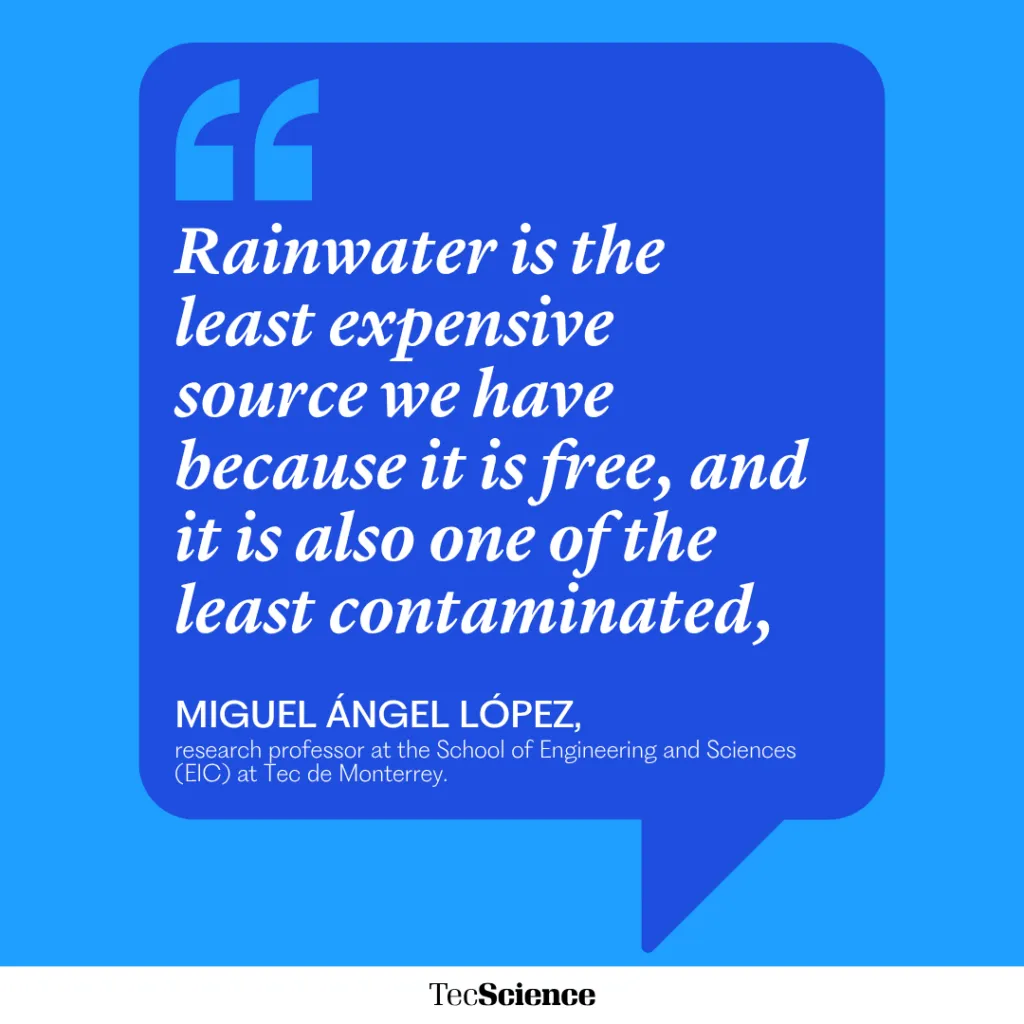
“Rainwater is the least expensive source we have because it is free, and it is also one of the least contaminated,” says Miguel Ángel López, research professor at the School of Engineering and Sciences (EIC) at Tec de Monterrey and part of the Water 360 group and the Water Center for Latin America and the Caribbean, as well as one of the authors of the article.
The methodology they developed is replicable and can be used practically anywhere that has the necessary information and data.
Edwin Alexis Fariz, Jawer David Acuña, Roxana Fonseca, and Thalía Turrén-Cruz from the EIC also participated in the study.
Why the Best Place Isn’t Where It Rains the Most
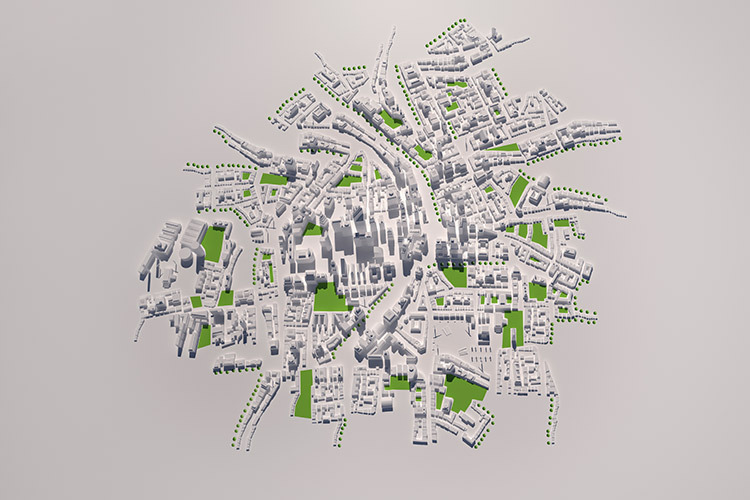
The methodology consisted first of delimiting the study area, dividing the basin into a grid of 500 x 500 cells. Afterwards, they combined Geographic Information Systems (GIS) with the Analytic Hierarchy Process (AHP) method, a tool that allows factors to be compared and the most important ones to be prioritized.
The identified parameters were grouped into: physical, ecological, and socioeconomic environment, with variables such as annual precipitation, catchment area, extreme rainfall events, slope, water demand, soil texture, population, and distance to water infrastructure.
Through the AHP and a questionnaire answered by water management experts, they classified the relevance of the parameters.
“Our most important finding is that the best place to install them is not always where it rains the most,” López says.

Areas That Could Cover 100% of Water Demand
Among the most important parameters are annual precipitation, the catchment area, extreme rainfall events, slope, and water demand.
The analysis showed that the areas where it is most convenient to place them are in the middle basin of the La Silla River, where high water demand, greater population density, and favorable conditions for collecting it coincide.
The study also calculated the water supply potential of some specific sites. In one of the analyzed areas, the collected rainwater could cover 100% of the annual non-potable water demand. In another, the percentage would reach 91.83%, while in a third it would reach 68.14%.
In another case, there would even be surpluses that could be used for irrigation of green areas, small-scale urban agriculture, or cooling systems, according to the authors.
Collecting Rainwater can Also Prevent Flooding
In addition to reducing pressure on conventional water sources, rainwater harvesting systems could decrease the risk of flooding.
“If we start by collecting water on rooftops and open paved areas, we are going to reduce the water that flows into the streets,” López points out.
The study detected important deficiencies in urban drainage infrastructure, especially in flat areas of the sub-basin, where intense rainfall increases the risk of structural damage and human losses.
The authors also warn that disorganized urban growth around protected natural areas has encouraged the occupation of zones vulnerable to landslides, flooding, and environmental degradation.
This, added to the population growth that occurs year after year in cities, places them under enormous water stress.
Barriers to Adopting Rainwater Harvesting
Although over the years it has been shown that rainwater harvesting could contribute enormously to reducing water scarcity, governments in different states still have not fully adopted it.
According to the researcher, one of the greatest limitations is that the rainy season is concentrated in four months, which makes it necessary to store the water.
“Having large storage systems discourages decision-makers because it would be very costly,” the expert points out.
However, he insists that it is less costly than installing pipelines to bring water from 100 or 200 kilometers away.
“What we do is optimize the storage system,” he explains. “You do not need to store all the water from four months to use it for the rest of the year. The system works as a buffer between what comes in and what you consume.”
The study focused on rainwater harvesting for industrial purposes, but the researcher says that at the level of homes and small businesses, between 30 and 35% of water demand could be covered through well-designed rainwater harvesting systems. And by combining it with greywater reuse, the savings could approach 90%.
The researcher has spent more than two decades working on technologies to collect, treat, store, and reuse rainwater.
In addition, they have designed graywater and rainwater treatment systems that result in water quality that complies with Mexican regulations.
“Both rainwater and graywater can be used for washing clothes, cleaning, bathing, all uses except direct consumption and cooking,” the researcher says.
A sustainable, Local, and Resilient Future Without Water Crises is Possible
López’s team has worked on pilot projects in homes, industries, and university buildings. One of them was installed in Residencias 15 at Tec de Monterrey, where they developed a system capable of collecting rainwater and treating graywater to reuse it inside the building.
They have also carried out industrial projects. In a logistics company in Mexico City, he explains, they managed to cover 100% of the water demand through rainwater harvesting.
The researcher imagines a world where every home, shopping center, and parking lot has water collectors, graywater reuse systems, and streets built with infiltration trenches and materials that allow water to penetrate and recharge the basins.
“Pavers can be used instead of asphalt with concrete,” the expert says.
The Biggest Obstacle Is Political
Beyond technology, López considers that the greatest obstacle is political and urban. Monterrey, he recalls, went from having 3 million inhabitants to almost 6 million in just two decades, a growth that no supply system can support.
Added to this is the lack of urban planning and regulations that force developers to incorporate sustainable solutions into new constructions that also endure through changes in government.
“Politicians prefer mega-projects because they look good politically,” he says. “An aqueduct stands out more than thousands of small systems distributed throughout the city.”
Even so, López believes that the future of water will have to be more local, decentralized, and resilient. By combining these technologies, cities and vulnerable areas of Mexico could manage their own supply and reduce costs by millions of pesos in the long term.
“Adding climate change to excessive urban growth, we are facing imminent water crises,” López says. “It is no longer a political issue, it is a matter of survival.”
Did you find this story interesting? Would you like to publish it? Contact our content editor to learn more at marianaleonm@tec.mx