

In October 1988, a few days before the US presidential elections, millions of households tuned in to a television program on the topic that had already fueled one of the most intense episodes of moral panic in the country: the alleged existence of satanic cults that abused children.
The special Devil Worship: Exposing Satan’s Underground, hosted by journalist Geraldo Rivera and broadcast on NBC—one of the largest commercial television and radio networks in the United States—reached approximately 19 to 20 million homes. The program was part of a narrative, known as the Satanic Panic, that had gained momentum since 1983 and linked allegations of satanic ritual abuse to daycare centers and communities across the country.
“This must have affected the 1988 election in some way, because it fell right in the middle of the Satanic Panic,” says Fernanda Sobrino, a research professor at the School of Government and Public Transformation (EGobiernoyTP) in Tecnológico de Monterrey.
Along with a group of researchers, Sobrino hypothesized that fear-based media exposure can influence the way people vote.
In a recent pre-print article, which has not yet been peer-reviewed, the group found that greater exposure to Satanic Panic narratives was associated with a temporary increase in voting for the Republican Party.
That year George H. W. Bush (known as Bush Sr.) became the forty-first president of the country.

A Temporary Change Based on Fear
To study the relationship between media exposure to fear-inducing narratives and voting behavior, the researchers analyzed 176 US television markets and used two independent ways of estimating how exposed each population was to panic.
The first was the geographic proximity to 36 major court cases involving allegations of satanic ritual abuse. The second was the ability of local NBC affiliates to reach households, an indicator constructed from pre-episode data that allowed for an approximation of exposure to the Rivera special.
The results point in the same direction: the most exposed markets saw an additional increase of between 0.5 and 1.2 percentage points in the proportion of Republican votes in 1988, depending on the indicator used. The researchers also found no similar prior trends that could explain the shift.
“Although the effect is less than 2%, let’s remember that (Andrés) López Obrador lost the 2008 election in Mexico by less than that,” Sobrino emphasizes.
Another interesting finding was that the effect associated with proximity to the cases disappeared by 1992. That is, the regions that had shown a temporary shift towards the Republican vote returned to their previous trend.
For the authors, this suggests that fear did not necessarily produce a permanent political change, but rather a phenomenon of transient salience: a perceived threat can temporarily activate certain political preferences and lose strength when the narrative that sustains it loses credibility.
The credibility crisis of the Satanic Panic came with an FBI report that concluded there was no credible evidence of organized satanic criminal networks.
Fear as a Political Tool
The case of the Satanic Panic and the temporary increase in the Republican vote is not easily extrapolated to the current world, because everything was different in the eighties.
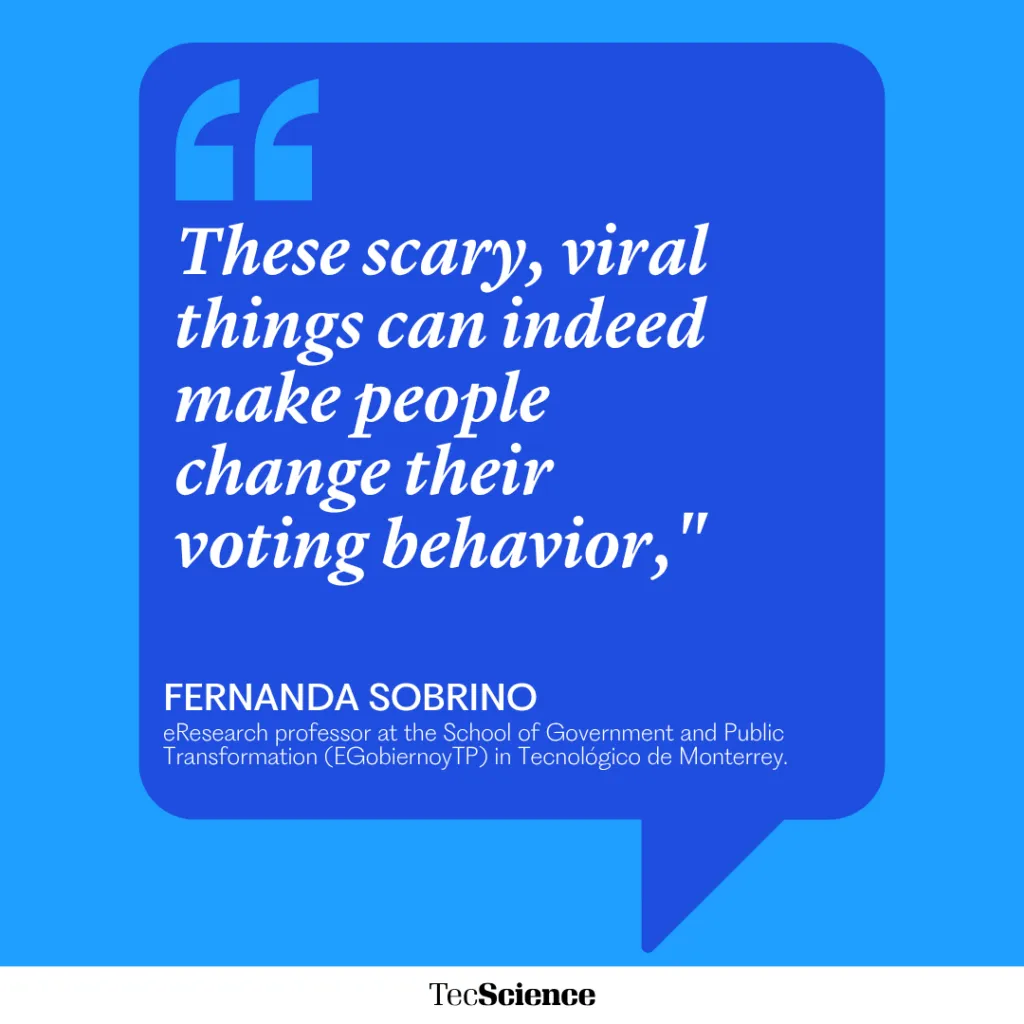
However, “what it does show is that these scary, viral things can indeed make people change their voting behavior,” the expert says.
For her, this means that it is possible to influence people’s political behavior through media content.
Today, these types of dynamics and content based on fear no longer depend on television and have moved to social networks, where, in a matter of hours, an idea can reach millions of people.
The authors caution, however, that the study has limitations. These include the fact that geographic proximity to the cases was also related to long-term demographic changes, and that the NBC indicator does not allow the entire effect to be attributed solely to the Rivera special. Furthermore, the analysis was conducted at the level of television markets, not individuals.
The study also does not demonstrate that a specific program alone changed the outcome of an election. Its main contribution is to show that entertainment media can become channels of political persuasion when they amplify fear-mongering narratives.
For researchers, the Satanic Panic episode offers a historical lesson: fear can temporarily modify political behavior, but its effects can depend on how long the threat that fuels it retains credibility.
“Pay attention to what you are consuming; it’s okay to stop watching Instagram or TikTok,” says Sobrino.
Did you find this story interesting? Would you like to publish it? Contact our content editor to learn more: marianaleonm@tec.mx