

For several decades, oil was a major source of revenue for Mexico. However, more money does not necessarily translate into greater state capacity to turn those resources into better services and opportunities for the population.
The case of Pemex is a clear example of state capacity, that is, the tools, institutions, and resources that enable governments to deliver results in areas such as security, education, health care, and infrastructure. care, and infrastructure.
The panel State(s) Under Construction: Reflections on Latin America, held as part of the 4th Latin American Congress on Social Sciences and Government, examined how these capacities are built through case studies from Colombia, Chile, Mexico, and Brazil.
The discussion, moderated by Edna Jaime, dean of the School of Social Sciences and Government (ECSG) at Tecnológico de Monterrey, featured Angelika Rettberg, dean of the School of Social Sciences at Universidad de los Andes; Sebastián Mazzuca, distinguished professor; and Carlos Elizondo, research professor, both affiliated with the ECSG.

A bigger state does not mean greater capacity
A larger state or one with a greater presence does not necessarily have stronger capabilities, said Mazzuca, a member of Tec’s Faculty of Excellence program and an expert on democracy, economic development, and state capacity.
He explained the importance of distinguishing between the size and quality of the state, noting that whether large or small, it can be inefficient in either case.
He added that state capacity is not an end in itself but is studied as a tool for achieving other goals. Its importance, therefore, lies in the effects it can have on economic development, democracy, and equality.
“You can’t think about institutions without capacity,” he said. “Rights don’t enforce themselves just because they exist on paper. You need the capacity to enforce them.”
Even market-based economies need a state capable of providing goods and services that the private sector alone would be unlikely to address, such as national defense, street lighting, water systems, epidemic control, and vaccination. Without state capacity, there would be no economic development.
He also noted that building state capacity takes time, since these investments may take anywhere from five to ten years to produce visible results. This poses a challenge for governments because they must bear the costs in the present, even though the benefits may not materialize until another administration is in power.

Violence and state weakness: a vicious cycle
The dean of the School of Social Sciences at Universidad de los Andes in Colombia, an expert on armed conflict, peacebuilding, and crime, noted that there is a relationship between state capacity and the violence affecting several countries in the region.
On the one hand, a state with weak capacity can create conditions that foster violence and crime. At the same time, these very problems can make it more difficult for a state to strengthen itself and respond to the population’s needs, particularly in areas such as public safety.
“Just as state weakness helps explain armed conflict and violence, conflict and violence also weaken states,” Rettberg explained. “This creates a very harmful dynamic in which weak institutions provide opportunities for violent behavior.”
Although state capacity has generally increased across Latin America, violence and crime remain a problem. Rettberg explained that for years, the prevailing assumption has been that greater state capacity and presence would help curb violence. However, the region’s experience shows that the relationship is more complex.
Against this backdrop, she proposed identifying the “most promising combinations” of state capacities for addressing challenges such as violence and inequality. These could include effective public administration, the ability to collect taxes, and control over weapons, while also incorporating a subnational perspective and considering differences in gender, age, and ethnicity.
“It’s not just about the state bringing in its offices and investments; it’s also about empowering local authorities and holding them accountable, engaging civil society, and sharing some of the responsibility,” she said. “State capacity is not simply a one-sided effort by institutions to come in and provide funding; it also involves coordinating efforts at the local level.”
Institutions that turn resources into results
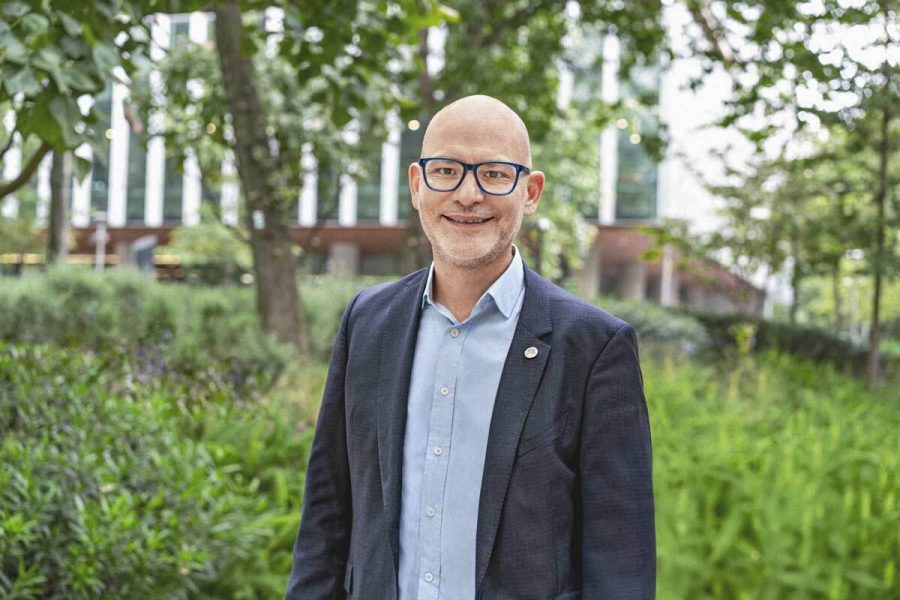
Elizondo, a research professor at the ECSG, an expert in social policy and political economy, and a former independent board member of Pemex, pointed to Mexico’s energy sector as an example of how having abundant resources does not necessarily translate into stronger state capacity.
He explained that for years, the country received substantial revenue from oil. However, the availability of those resources also allowed governments to postpone some of the institutional reforms needed to strengthen the state.
“In 2004, Mexico was producing 3.4 million barrels of oil, 2 million of which came from Cantarell, and it was so easy to extract that no matter how many mistakes you made, you still had oil revenues equivalent to 4, 5, or 6 percent of GDP.”
For years, Mexico’s energy sector relied primarily on Pemex. However, it lacked sufficient mechanisms to manage its reserves, evaluate the company’s performance, and foster competition—all of which the researcher considered vital to strengthening state capacity in this area.
By contrast, he cited the case of Petrobras in Brazil, where agencies were created to manage the country’s oil wealth and institutions were established to evaluate the company’s performance and allow for competition.
“To strengthen a company like Pemex, what you need are strong institutions and competition,” he added. “In Brazil, to build that state capacity, you have to put in place a series of agencies to manage the country’s oil wealth, along with competition to push Petrobras to become truly capable of extracting those resources as efficiently as possible.”
The 4th Latin American Congress on Social Sciences and Government was held October 1–2 at Tec’s Mexico City campus, bringing together experts from the three universities that make up La Tríada: Universidad de los Andes in Colombia, Pontificia Universidad Católica de Chile, and Tecnológico de Monterrey.
Did you find this story interesting? Would you like to publish it? Contact our content editor for more information: marianaleonm@tec.mx