

On a piece of pink fabric, a woman stitches the outline of a young girl raising her left arm—as if trying to be found in a crowd. Across the figure, she embroiders a powerful message in black capital letters: # NOT ONE MORE (in Spanish, Ni una más. Using needle and thread, she joins her piece to those created by other women in the community known as Patchwork: Healing Blanket, where embroidery has become both a path to healing and a way to denounce gender-based violence.
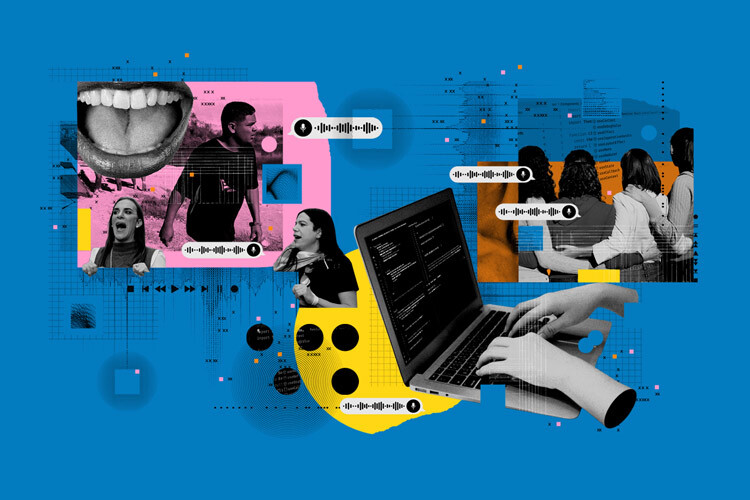
Researchers at Tecnológico de Monterrey want the women in that community to tell their own stories through videos, audio recordings, written accounts, images, and other forms of digital storytelling without anyone speaking on their behalf and with the opportunity to bring their message to a wider audience.
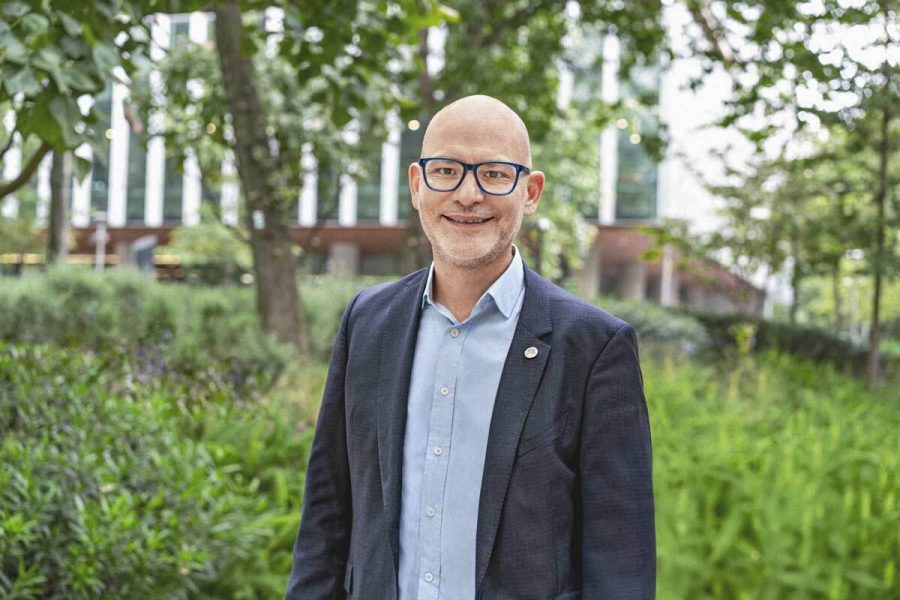
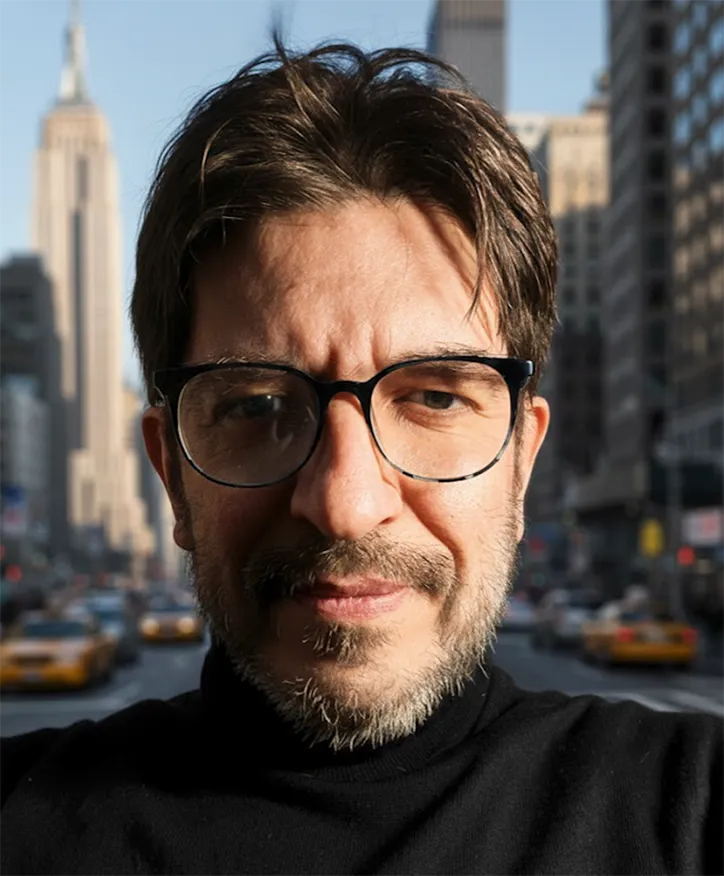
That is the goal of the Narrateca for Social Justice, a research project to create a digital platform where people from historically marginalized communities can share their own testimonies, says Jacob Bañuelos, a research professor at the School of Humanities and Education (EHE) at Tecnológico de Monterrey’s Mexico City campus.
“The idea is for these narratives to come directly from their own lived experiences, going a little beyond traditional media or other intermediaries,” Bañuelos explains. “We want to approach these communities from within to recover those experiences.”
Intersectionality, Told in Their Own Voices
The initiative works with four groups: migrants, women who have survived gender-based violence, women with disabilities, and members of the LGBTQ+ community. The project also embraces an intersectional perspective, recognizing that a person may, for example, belong to the LGBTQ+ community while also having experienced gender-based violence or living with a disability.
Narrateca will teach participants how to create digital stories in a variety of formats, including animations and illustrations generated with artificial intelligence (AI), as well as written works and digital literature. Another goal is to build a digital repository of personal testimonies.
As part of this effort, the research team is conducting a series of workshops where participants learn how to use digital tools.
Bañuelos emphasizes that what sets this initiative apart is that the stories are not defined by academics. Instead, the communities themselves will decide which experiences they want to share and the formats they want to use.
“We don’t want to come in and impose a particular type of narrative,” Bañuelos explains. “We want to explore what these communities want to express and how they want to express it. The platform should make it easier to experiment with new forms of expression. A story can be told through a single medium, but it can also weave together multiple formats, such as sound, text, a still image, and then video.”
AI: Not Here to Replace, but to Assist
Although AI is one of the technologies powering the Narrateca for Social Justice, its purpose is not to replace the voices of these communities or to generate their testimonies automatically.
Instead, AI is meant to expand opportunities for self-expression by providing creative tools for developing images, while also making useful information more accessible. Its use will follow ethical guidelines and always remain under human oversight.
One example is the development of a chatbot initially designed for migrants. The virtual assistant draws on information from official sources as well as experiences shared by the community itself. Its goal is to provide reliable information about legal rights, administrative procedures, and other topics relevant to migrants.
Supporting Participants and Curating Testimonies to Prevent Revictimization
Bañuelos explains that before any stories are published on the platform or incorporated into the chatbot’s database, they go through a process of support and editorial review designed to protect the identity and safety of participants. In this way, the project seeks to ensure that the content does not revictimize or expose those who choose to share their experiences.
In some cases, such as stories from members of the LGBTQ+ community, testimonies will remain anonymous, and participants will be free to decide at any time whether they want to keep their stories on the platform or have them removed.
“We have a very rigorous ethical protocol to protect people’s identities and, above all, to prevent revictimization,” the researcher says.
The research team is currently working with about 10 organizations and community groups that already serve these populations, including El Buen Samaritano in Nuevo León; Border Line Crisis Center in Baja California; Caminantas in Jalisco; Red Arcoíris de Resistencia in Coahuila; Las Vanders in Mexico City; and Patchwork: Healing Blanket, which operates in several regions of the country.
“In these first few months, we’ve learned that we can’t do this work alone,” he says. “We need to build partnerships with organizations and projects that have already established themselves in this field. If you come in from the outside without knowing the community or the people involved, it’s much harder to earn their trust.”
Working alongside Bañuelos are Mariángela Abbruzzese, a researcher at Tecnológico de Monterrey; Gabriel Pérez of the Autonomous University of Coahuila; and Rubria Rocha of the Autonomous University of Nuevo León. The project is funded by Mexico’s Secretariat of Science, Humanities, Technology, and Innovation (SECIHTI) and is expected to run for two and a half years.
200 Stories That Matter
Over that period, the project aims to train about 150 people in creating digital narratives, establish a network of 20 community facilitators, and collect at least 200 stories to be published on the platform. The team also expects the site to attract around 10,000 visitors during its first year of operation.
In its first six months, the project has already gathered about 50 stories. A first public version of the platform is expected to launch during the second half of the year, with additional tools and features to be introduced over time.
Although the platform is designed primarily for the people participating in the project, Bañuelos believes it could also help reshape how society at large engages with these communities. Looking ahead, the team also plans to work with young people experiencing violence and other forms of vulnerability.
“I would like this tool to become a trusted source for stories told by members of these communities themselves, one that enables free expression in a way that is both empowering and critical, while remaining closely connected to artistic and aesthetic forms of expression,” Bañuelos says. “We want to build counter-narratives that challenge dominant narratives and help foster a culture of respect, equality, and peace.”
Were you interested in this story? Want to publish it? Contact our content editor to learn more: marianaleonm@tec.mx