

Between the 16th and 18th centuries, the fleets of New Spain served as the primary means of transporting everything that crossed between the Americas and Europe. Thousands of people traveled aboard these ships, along with animals, plants, food, and scientific and medical knowledge.
The voyages of these vessels were recorded in thousands of documents now scattered across historical archives in Mexico, Spain, and other countries.
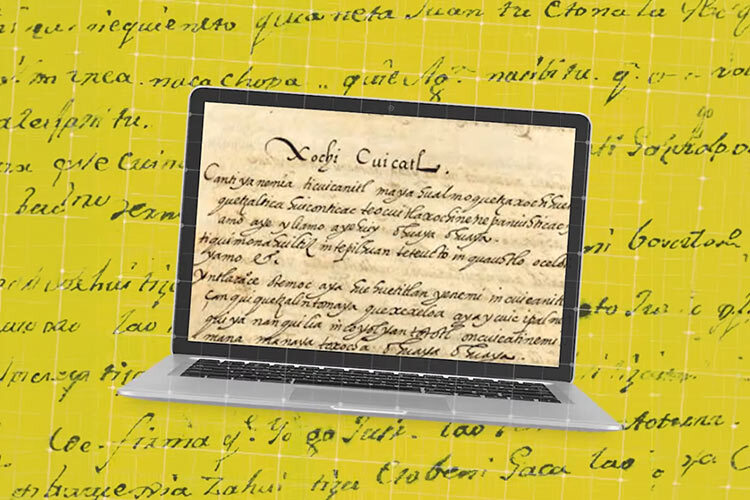
Even so, many of these manuscripts remain unstudied, despite the fact that many have been digitized. Most exist only as images of handwritten texts, and reading them requires specialists in paleography to transcribe, page by page, a form of Spanish that differs greatly from the modern language, a process that can take years to complete for just a single collection of documents.
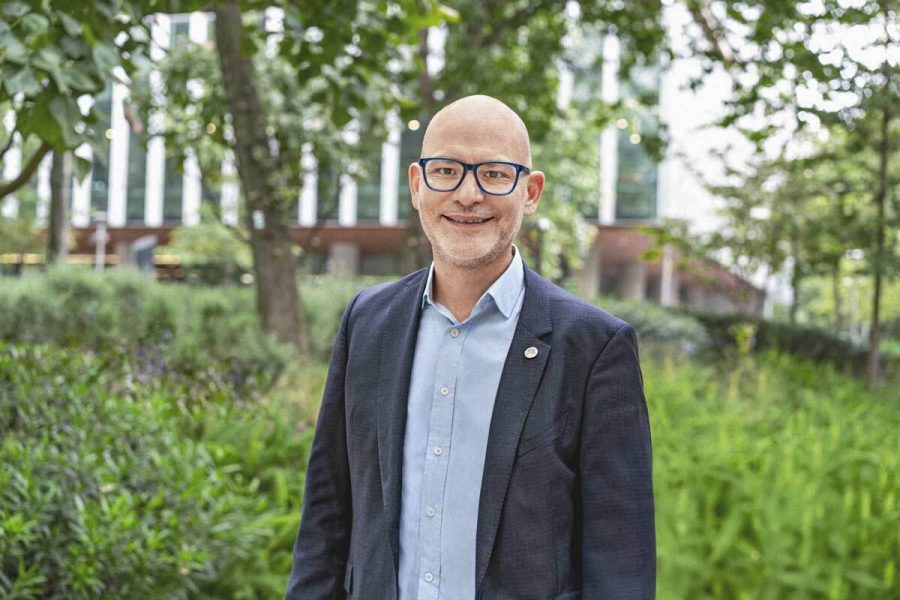
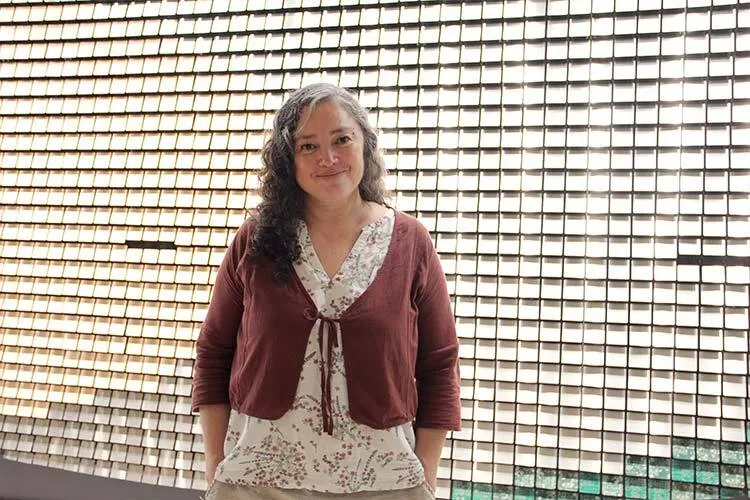
A team of researchers led by Patricia Murrieta, Distinguished Professor at the School of Humanities and Education (EHE) at Tecnológico de Monterrey, is developing artificial intelligence (AI) based tools to decipher these documents. The New Spain Fleets project aims to transcribe, modernize, and analyze approximately 320,000 documents related to these vessels, making it possible to study historical processes that have long been difficult to examine on a large scale.
“We have an extraordinary wealth of documentation because the Spanish Empire kept records of everything that happened with these fleets: who traveled, how they traveled, and what was being transported,” explains the professor of Digital Humanities and Artificial Intelligence.
“These tools open up the possibility of accessing documents we have never been able to study before. They are going to transform, in many ways, the stories we tell and, as a result, our place in the world.”
Documents Spanning More Than Two Centuries of Life
Most of these documents are housed in the General Archive of the Indies in Seville, Spain, and the General Archive of the Nation in Mexico. They include records of trade routes, passengers, cargo, plants, and animals, as well as legal disputes and other aspects of everyday life.
Accessing this information is no easy task, Murrieta explains. The documents were written by different people over the course of more than two centuries, using a wide variety of handwriting styles and a form of Spanish that evolved significantly over time.
In addition, the texts contain Indigenous names, abbreviations, and expressions that require specialized expertise to interpret.
“I have colleagues who have devoted their entire careers to analyzing a single corpus of documents,” the researcher says. “First, we have to transcribe the manuscripts, then publish them, and only afterward can we analyze them. That entire process can take a lifetime.”
Through the New Spain Fleets project, the team hopes to accelerate this work by developing a corpus containing thousands of digitized documents, along with tools that will enable other researchers, paleographers, historians, and archaeologists to explore new questions based on the information they contain. The project will also make it possible to identify patterns that might otherwise remain hidden when only a handful of documents can be examined at a time.

A Workflow Designed to Ask New Questions
The team also designed the tools to function as a streamlined workflow:
- First, one model identifies the type of handwriting found in each manuscript.
- Next, a second model automatically transcribes the text.
- Once the text has been transcribed, a third tool modernizes the archaic Spanish, converting it into a version that is easier for contemporary readers to understand.
Finally, software identifies the names of people, places, dates, institutions, plants, animals, and other historical entities to build a searchable database that serves as a digital repository, allowing users to organize and explore the information contained in manuscripts that are more than 400 years old.
Through this digital corpus, researchers can ask questions that until now have been difficult to answer, the researcher notes. “We can search and analyze the information contained in thousands of pages—something that would take an enormous amount of time using traditional methods.”
Connecting the Stories of Merchants, Nobility, Officials, and Social Networks
To explore the potential of these tools, the team is also working on five case studies based on documents related to the New Spain Fleets.
The first seeks to reconstruct the networks of people who traveled on or were involved with the fleets. The goal is to identify the relationships among merchants, government officials, clergy, members of the Indigenous nobility, and other travelers to better understand the political, social, and economic connections between the two continents.
Another case study focuses on the circulation of scientific and medical knowledge. For example, researchers are tracing how American plants and the knowledge Indigenous peoples possessed about them, as they crossed the Atlantic, influenced the development of European science.
“There is an extraordinary wealth of Indigenous knowledge about plants and their medicinal uses,” the researcher says. “Through these documents, we can examine how that knowledge was being transmitted.”
A third case study examines the “cargo marks,” symbols placed on crates, sacks, and other shipments to identify their owners or intended recipients. According to Murrieta, these marks functioned much like the barcodes used today to track the movement of goods along the trade routes of the 16th century.
The final two case studies focus on gaining a deeper understanding of Indigenous slavery during the colonial period and the trade routes that goods followed once they arrived in New Spain.
Developing AI Models That Represent More Than the Global North
Beyond reconstructing historical processes, the project also aims to advance the development of AI models that incorporate a broader diversity of languages, documents, and Latin American perspectives.
To that end, the team has also developed models capable of transcribing documents written in Classical Nahuatl, expanding access to understudied historical sources that will help create new AI tools with stronger representation of the cultures of this region.
“Every model you train depends on the data you train it on, which means it will inevitably reflect the biases present in that data,” Murrieta says. “If you ask a question about Latin America, the answer is likely to reflect not a Latin American perspective, but the Global North’s view of Latin America. These tools will allow us to analyze history in many new ways, while also helping us build language models that meaningfully represent the Global South.”
Ultimately, Murrieta emphasizes that the project seeks to democratize the historical information contained in these manuscripts by making it accessible not only to specialists, but also to researchers from other disciplines and to communities that can use, analyze, and benefit from it in a form of Spanish they can readily understand.
Although much of the process is automated, the results are reviewed and validated by specialists before being incorporated into the corpus. The team brings together historians, archaeologists, digital humanities scholars, paleographers, specialists in Indigenous languages, and AI experts from Tecnológico de Monterrey, as well as institutions including Lancaster University, Mexico’s National Institute of Anthropology and History (INAH), the National Autonomous University of Mexico (UNAM), the National School of Anthropology and History (ENAH), and the University of Alicante, among others.
The project is also funded by UK Research and Innovation (UKRI) through the Economic and Social Research Council (ESRC) in the United Kingdom to support the development of AI tools to study three centuries of socioeconomic history.
For Murrieta, uncovering the history preserved in these manuscripts also helps us better understand our present as a society and make more informed decisions about the future. “It is essential that we know our history. If we, as a society, do not understand where we come from, it becomes very easy for an identity that is not truly ours to be imposed upon us.”
Did you find this story interesting? Would you like to publish it? Contact our content editor to learn more at marianaleonm@tec.mx