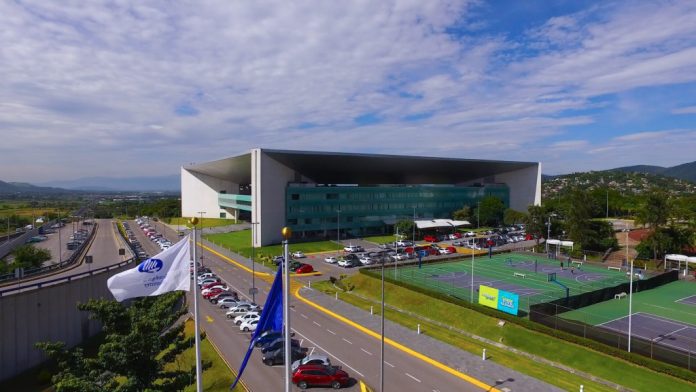


For the first time in its history, the U.S. National Academy of Engineering (NAE) is holding a meeting in Mexico. Co-organized and hosted by Tecnológico de Monterrey, the event brings together engineering leaders, researchers, and industry representatives to discuss how to tackle shared challenges.
Under the theme “From Resilience to New Opportunities: Building North America’s Supply Chain of the Future,” the meeting aims to foster scientific and technological collaboration among Mexico, the United States, and Canada to strengthen the region’s competitiveness.
“We have opportunities like never before to accelerate progress together, to coordinate our investments, to help ensure that our region remains technologically competitive, because technology leadership is going to be important for economic prosperity but also for national security,” said Tsu-Jae Liu, president of the NAE.
During the meeting, experts and representatives from the NAE, Tecnológico de Monterrey, and the Mexican Academy of Engineering (AIM) discussed the challenges and opportunities that factors such as artificial intelligence (AI) and the development of new talent present for the region’s future.

A Historic Gathering for Engineering
Javier Guzmán, executive vice president of Research at Tecnológico de Monterrey’s Educational Group, explained that the idea of bringing the conference to Mexico began taking shape more than a year ago.
“Today marks the first step toward building that relationship,” Guzmán told TecScience in an interview. “First, we establish a connection. Then, that connection evolves into collaborations and joint projects.”
This growing relationship, he added, could strengthen engineering education, encourage academic exchanges, and even pave the way for more Mexican specialists to join the NAE.
Guillermo Aguirre, president of the Mexican Academy of Engineering (AIM), said the meeting offers an opportunity to identify areas of collaboration that could help both countries make the most of their scientific and technological capabilities.
He noted that both organizations are already pursuing initiatives in their respective countries to identify talent, share knowledge, and build relationships with other institutions. By joining forces, they could significantly expand the reach of these efforts.
“What we want is to do it better and make a greater impact, together,” he said.
The Next Generation of Engineers Must Be More “Human”
As part of the meeting, a panel discussion titled “Engineering and the Future of North American Competitiveness” brought together David Garza, executive president of Tecnológico de Monterrey’s Educational Group; Tsu-Jae Liu, president of the NAE; and Guillermo Aguirre, president of the Mexican Academy of Engineering (AIM).
During the discussion, moderated by Javier Guzmán, the panelists emphasized the importance of collaboration among the three North American countries to strengthen talent development and drive technological innovation.
“The challenge is not just related to supply chains, but how do we prepare graduates who will be working in a world that is already immersed in AI?” Garza said.
He emphasized that regional collaboration in engineering could help develop solutions to shared challenges, including water, energy, and food security.
For her part, Liu noted that each country brings unique capabilities and strengths to the table. She argued that collaboration should not be limited to sectors such as trade and manufacturing but should also extend to education, infrastructure, and talent development.
She also stressed the importance of inspiring younger generations to pursue engineering careers, noting that technological progress requires professionals with strong interpersonal skills and a deep understanding of society’s needs.
“Humanity also refers to human nature. It also refers to the quality of being human. Humanity involves compassion, kindness, empathy. Those are the things that I think future engineering leaders are going to have if we want to really benefit, make sure that technology continues to benefit humanity,” said the NAE president.
Aguirre underscored the importance of the two academies working together to identify opportunities that could advance technological development and strengthen North American competitiveness. “Anything we do well could be even better if we do it together,” he said.
Looking ahead, David Garza shared his vision for the next decade: “I would like to see that in 10 years from now, an innovation ecosystem has developed in the region, not just something focused on trade but also on advancing innovation. I would like to see that there is a flagship project, a flagship binational or trinational project.”

Tecnológico de Monterrey: A Key Partner for North American Engineering
NAE President Tsu-Jae Liu explained that the partnership with Tecnológico de Monterrey was a natural fit, given the university’s leadership in technology education.
“It’s training highly skilled technical talent, and it does have a global reach. It has a lot of partnerships with institutions in the United States, and also it’s a hub for innovation,” she explained in an interview.
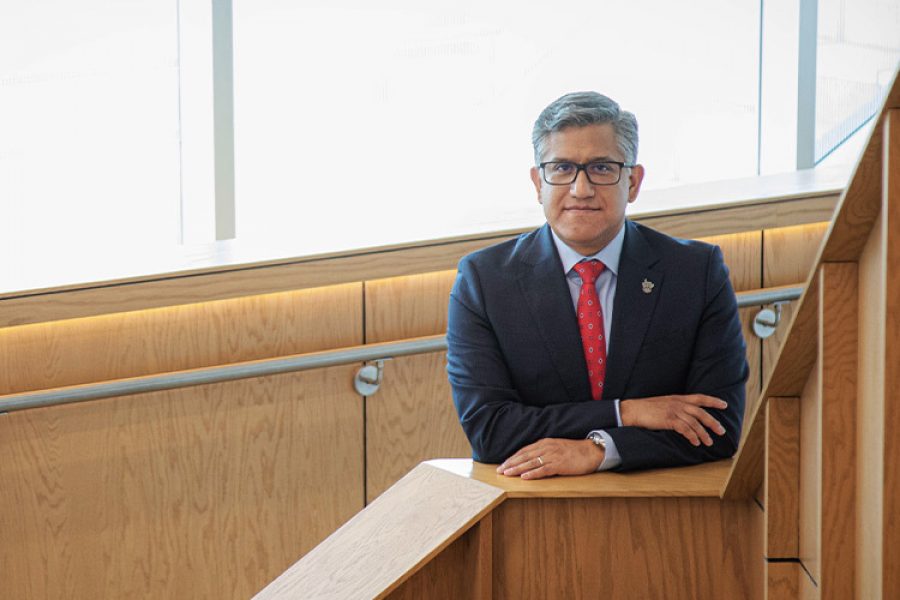
Meanwhile, in his opening remarks, Juan Pablo Murra, rector of Tecnológico de Monterrey, said: “At Tec, we want to help these relationships continue beyond this gathering. We hope they create new opportunities for our researchers, professors and students, and strengthen the connection among engineering communities in North America.”
Did this story interest you? Would you like to publish it? Contact our content editor to learn more: marianaleonm@tec.mx