

Inspired by Tokyo’s DAWN Avatar Robot Cafe, where people with severe motor disabilities remotely operate robots to serve customers, researchers at Tecnológico de Monterrey are developing a robotic teleoperation platform that can be applied to the manufacturing industry.
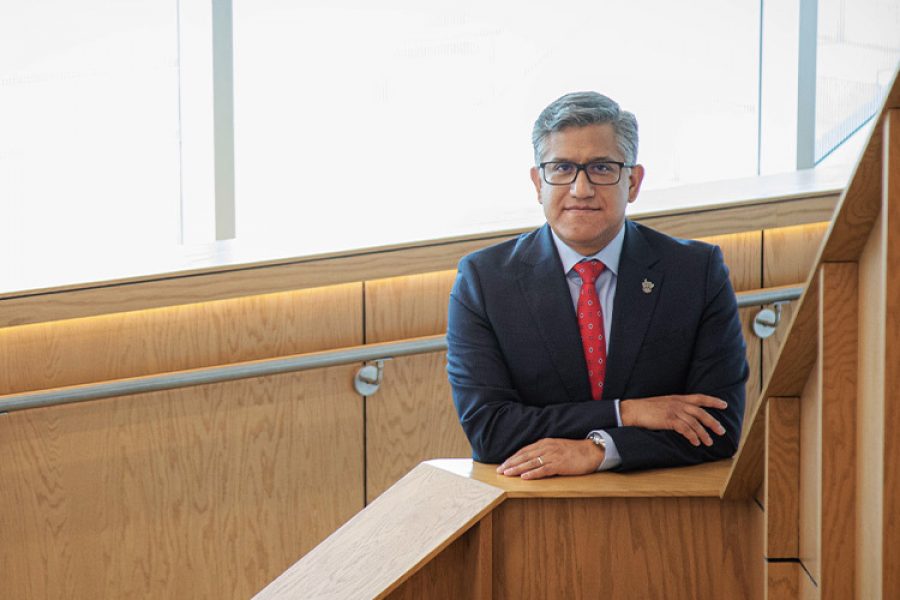
The project, Formal and Robust Collaborative Models for the Inclusion of People with Motor Disabilities in Manufacturing, also incorporates virtual reality, digital twins, depth cameras, and computer vision, explains Carlos Renato Vázquez, a research professor in the Department of Mechatronics at the School of Engineering and Sciences (EIC) at the Guadalajara campus.
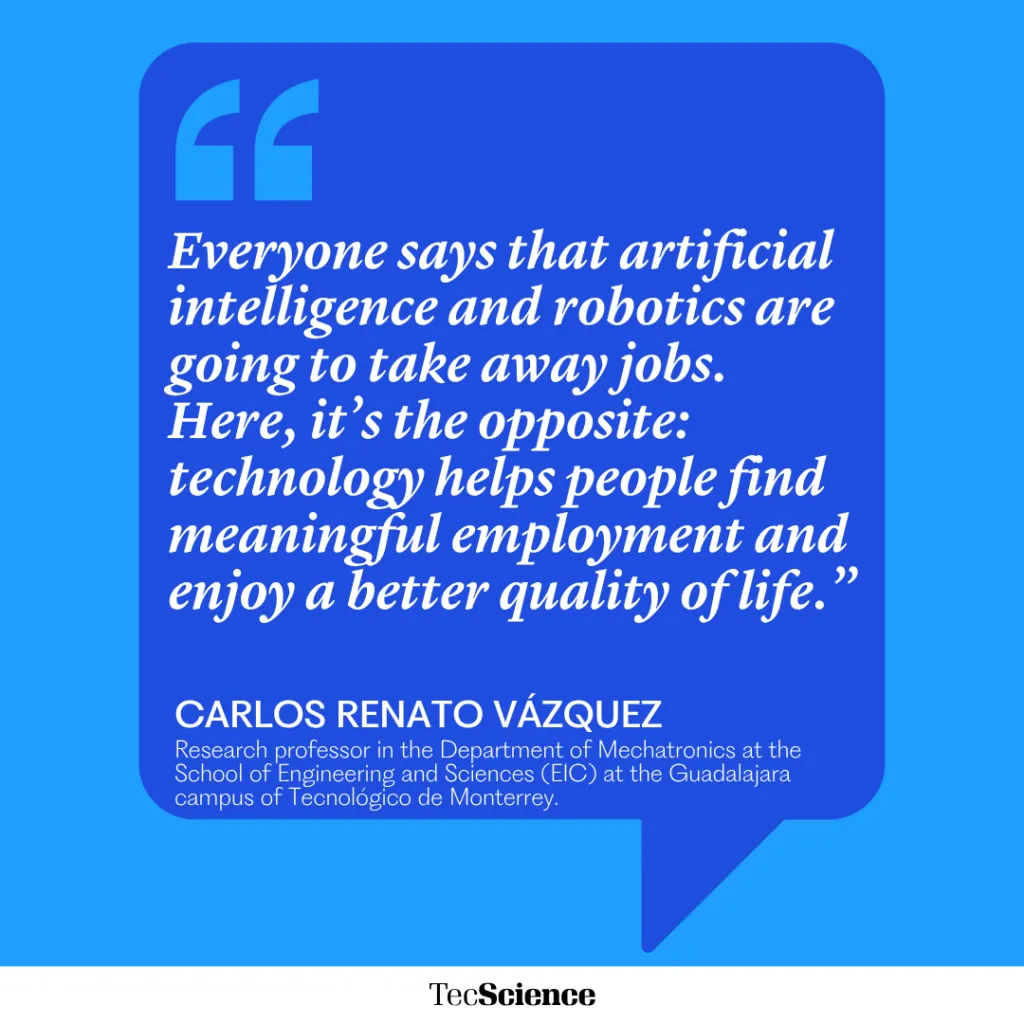
“Everyone says that artificial intelligence and robotics are going to take away jobs. Here, it’s the opposite: technology helps people find meaningful employment and enjoy a better quality of life,” says Vázquez, who leads the initiative.
Paid Employment for People with Severe Motor Disabilities
According to the researcher, beyond its economic benefits, the platform is designed to address the social isolation and lack of employment opportunities faced by people with severe motor disabilities.
“For many people with motor disabilities, finding paid employment is extremely difficult. But it is also incredibly valuable for them to be able to interact with other people and no longer live in isolation,” he says.
The project also addresses a need within the manufacturing industry, where some specialized positions are difficult to fill. Teleoperation would make it possible for trained people with motor disabilities to perform those tasks remotely.
Solutions like these could become even more important in the years ahead as the global population continues to age. As a result, there will be a growing need for assistive technologies that enable people to remain in the workforce.
Controlling Real Objects Through Virtual Environments
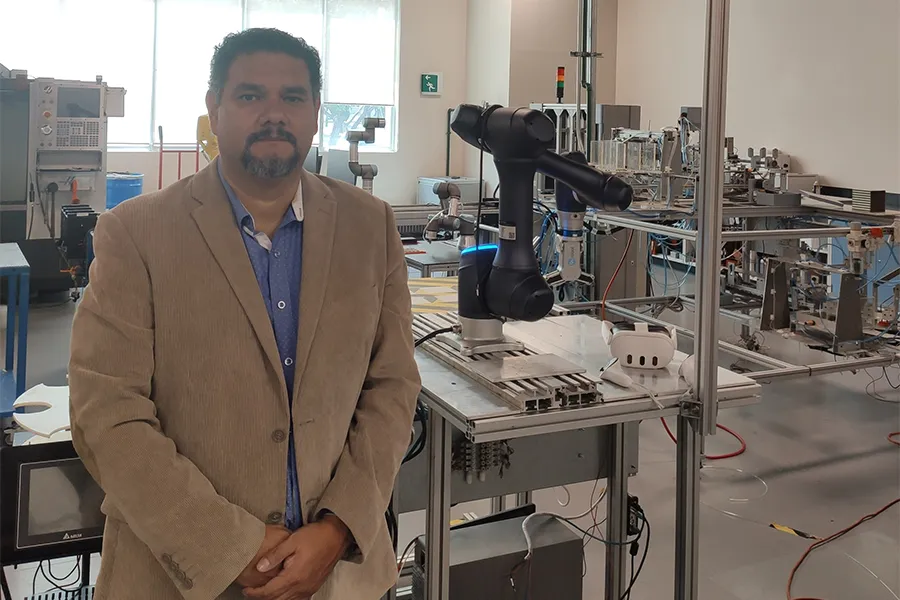
The project was designed around two operating models. The first allows a person to control an industrial robot located inside a factory while working remotely from home. The second envisions the worker traveling to the plant, where robotic assistance would enable them to perform tasks they would otherwise be unable to carry out on their own.
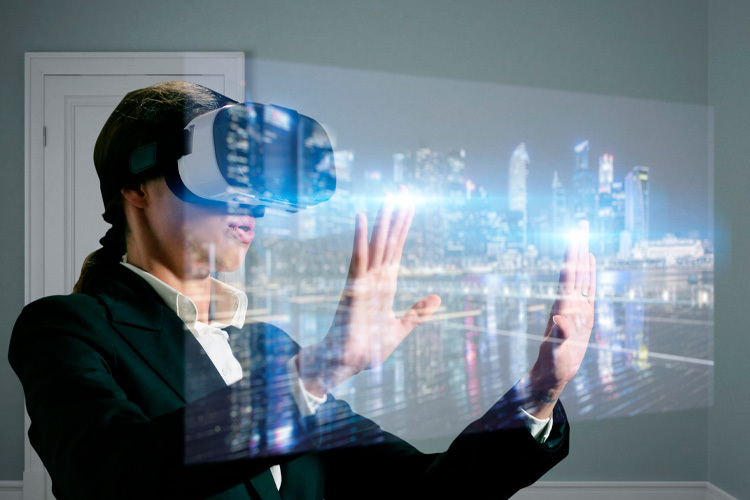
In the pilot tests, participants wearing virtual reality headsets manipulated a digital replica of an industrial robot’s gripper to move a cube detected by depth cameras. When the operator moved the virtual model and pressed a button, the physical robot replicated the motion to grasp the object.
“The idea is that, by controlling virtual objects, the person can teleoperate the robot to manipulate real-world objects,” he explains.
Vázquez adds that the project focuses on industrial operations that still cannot be automated, such as connecting or assembling parts with hoses, cables, or other flexible components. These tasks remain challenging even for advanced autonomous robots because they require anticipating how materials will deform and continuously adjusting movements in real time.
“Here in Guadalajara, we work with companies that assemble products on a large scale. For these kinds of assemblies involving flexible components, a robot alone can’t do the job. But if a person is guiding the robot on how to grasp the part and how to insert it, then it can accomplish the task.”
Another key aspect of the project is its emphasis on using equipment and technologies that are already commercially available, such as existing industrial robots, VR headsets, and off-the-shelf cameras. By relying on widely available hardware, the team hopes to make it easier for manufacturers to adopt the model.
Likewise, using commercially available equipment ensures that the technology is not confined to expensive laboratory prototypes or systems that are difficult to implement in real-world settings.
“We’re trying to strike a balance. The focus is on people with disabilities—the technology has to be useful for them. But the robot and the VR headset won’t be paid for by the individual; they’ll be paid for by the company,” he says. “And for a company to make that investment, it has to see a return. In other words, we have to make sure this technology has a real chance of being purchased, adopted, and put to productive use. If the numbers don’t add up, it simply won’t go anywhere.”
Not Just Automating Processes, but Expanding Opportunities
The project, funded through the Basic and Frontier Science program of Mexico’s Ministry of Science, Humanities, Technology, and Innovation (SECIHTI), aims to develop methodologies and technologies that can be replicated across the country’s manufacturing industry.
The initiative is currently in the technology integration phase, where the team has already made significant progress. “The first and most visible milestone is bringing all the technologies together and getting the system to work as a whole. We’re about 50 percent of the way there,” he says.
In the next stages, the researchers will validate the platform with people who have varying degrees of motor disability, evaluating how they interact with the system and making any necessary adjustments. This process will involve designing research protocols and obtaining approval from an ethics committee.
The researcher estimates that this phase could take as long as a year and a half because of the complexity of conducting trials with human participants.
“The technical specifications, user guides, and methodologies will all be made publicly available. If a company wants to build its own workstations, we’ll explain the entire process from start to finish: purchase these technologies, install the software we developed, carry out these tests and measurements with both the users and the robot, and you’ll be able to implement the platform on your own.”
As the project continues to scale, the team hopes the methodologies they develop will be widely adopted to ensure that robotics not only automates industrial processes but also expands employment opportunities for people with motor disabilities.
Did you find this story interesting? Would you like to publish it? Contact our content editor for more information: marianaleonm@tec.mx