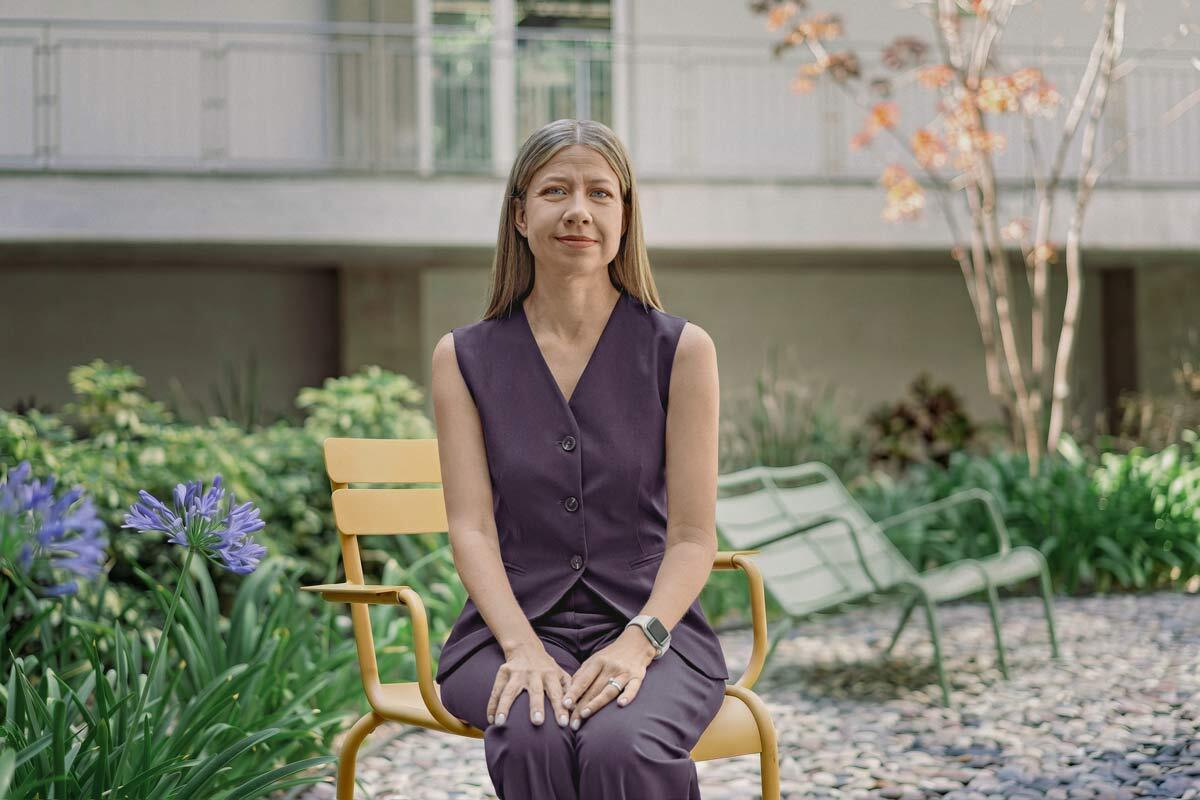


There is one statement Cecilia Treviño often makes that tends to spark debate: “Plastic is not the enemy.”
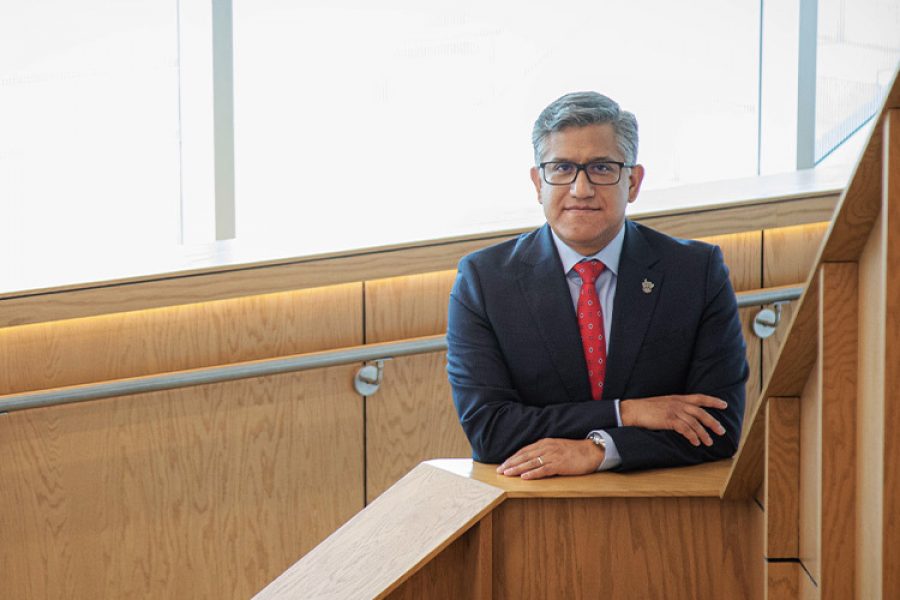
A researcher at the AI for Manufacturing and Supply Chain Institute (AIMS) and a professor at Tecnológico de Monterrey’s School of Engineering and Sciences, Treviño has spent much of her career studying polymers and sustainable materials. This year, she was also recognized by 3M as one of Latin America’s 25 Women in Science.
In this interview, Treviño reflects on her journey into science and the force that has driven it from the beginning: curiosity. She talks about the mentor who changed the course of her career, led her into research, and the ADHD diagnosis she received as an adult that helped her better understand her own story.
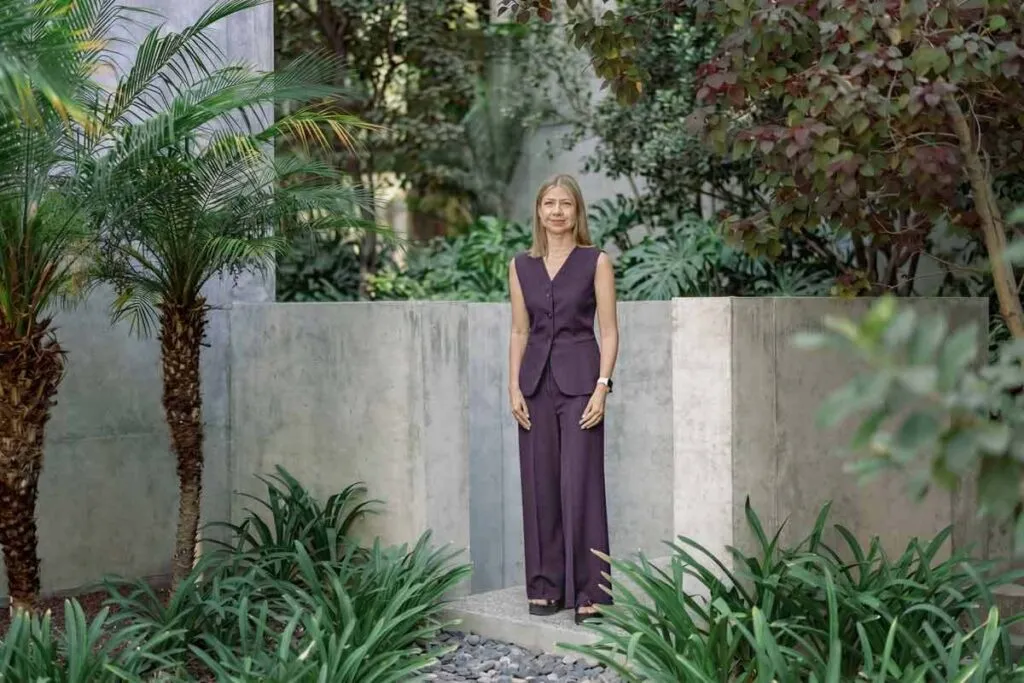
A Curiosity That Started Early
Engineering was never an accident. Long before choosing a career path, Cecilia spent much of her time trying to understand why some materials reacted when mixed together, how heat transformed matter, and what happened when things failed to behave as expected.
What led you to pursue chemical engineering?
I always knew that was what I wanted to study. My godfather is a chemical engineer, and two of my father’s closest friends are as well. But I also had a deep scientific curiosity. I was always looking for answers, coming up with hypotheses, and testing what would happen. Many people saw it as mischief, but I genuinely wanted to understand how things worked.
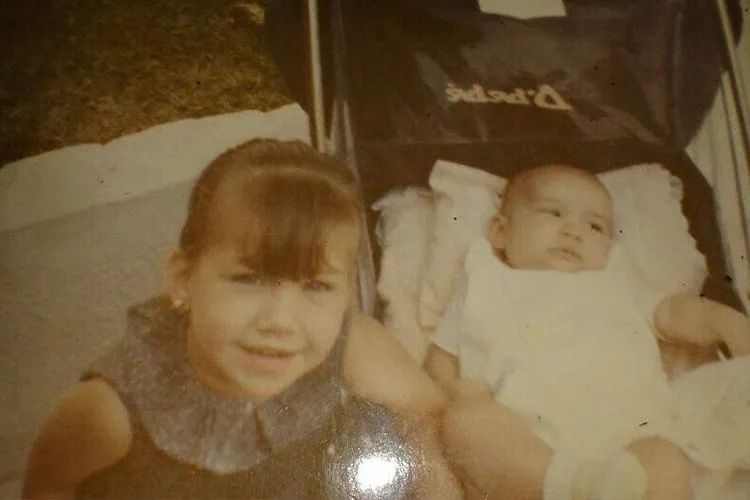
I had countless chemistry kits growing up because I would go through them in just a couple of days and then save up to buy another one. Now I understand myself much better because I was diagnosed with ADHD as an adult. That little girl with endless scientific curiosity was connected to that all along.
I also attended PrepaTec in Tampico, very close to the petrochemical corridor. That was when I finally put a name to something I had known for years. When I moved to Monterrey to study chemical engineering, I was genuinely happy—it was exactly what I had imagined.
The Email That Changed Everything
After graduating, Cecilia entered the workforce, but a series of layoffs left her unemployed. In the middle of that uncertainty, an opportunity appeared that would ultimately define her career.
Who introduced you to the world of research?
I received an email from Jaime Bonilla Ríos, who was Alumni Director, who essentially changed my life because he was the person who led me to what I do today.
It was an invitation to apply for Tec’s Master of Science in Manufacturing Systems program. Within a month, I was already enrolled at the Monterrey campus.
Jaime Bonilla was also a researcher, and in his laboratory, I began working with plastics. Later, I had the opportunity to attend Rice University, which opened many other doors. He was my advisor and eventually became my mentor. Thanks to him, I’m where I am today.
What was it like to immerse yourself in materials research?
Honestly, it was very challenging. I lacked many of the tools and skills I needed, and I had to learn entirely new things.
Jaime used to say that one of his formulas for developing successful researchers was pushing engineers outside their comfort zones. He took a chemical engineer and threw her into the world of mechanical engineering. It’s something I later tried to replicate with my own students, and it has worked very well.
The Scientist Who Defends Plastic
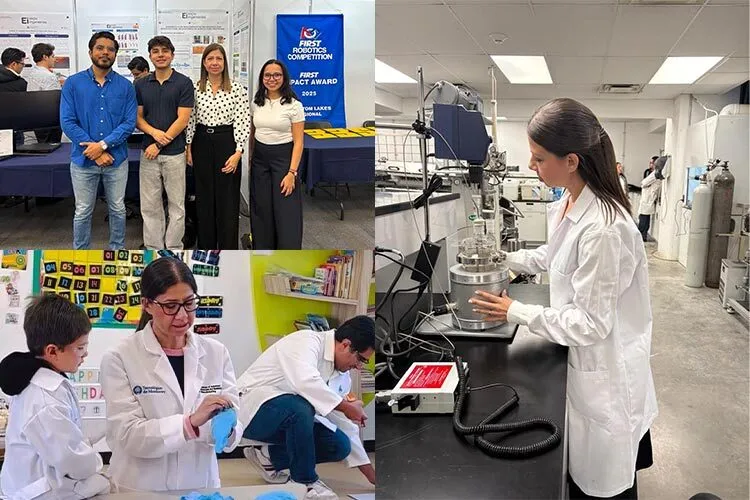
Throughout her career, Treviño has studied polymers and sustainable materials. At a time when plastic is often associated with pollution and waste, she continues to defend an idea that is not always popular: the problem is not the material itself, but how we use it.
You’ve said that plastic is not the enemy and that it is one of the best materials ever created. What is your perspective on its reputation?
I think a lot of it comes from trends and narratives that are not always grounded in science. With my students and during conferences, I like to do myth-versus-reality exercises and use scientific evidence to challenge many of those assumptions.
Plastic is inexpensive, easy to manufacture, and incredibly versatile. Of course, microplastics are a real issue—I’m not denying that—and that’s why we continue looking for solutions. But the problem is not the material itself; it’s the way we use and dispose of it.
To me, the answer lies in education: educating people about consumption and environmental responsibility. Plastic is not the only material that has environmental impacts, but it has become the main villain in the public conversation.
As a researcher, much of your work focuses on giving materials a second life. When did you begin thinking about recycling and reuse as a solution?
I started working with composite materials and sustainability during graduate school. Once I understood how difficult recycling can be in terms of manufacturing processes and costs, I realized that the solution also had to involve reuse.
I always say, ‘When you are a polymer, you are always a polymer.’ So we started looking for ways to use those materials differently.
Then came projects involving rubber and coffee waste, followed by textile projects that used recycled polyethylene. We have always pursued sustainability through reuse and the development of new materials.
Which of those projects makes you the proudest?
It’s difficult to choose just one, but the packaging project that uses waste from coffee—and now also agave, corn cobs, and cassava—is one of the projects I’m most proud of.
It started as a pitch competition where I represented the team, and we secured funding. It has helped our research group grow tremendously.
The project also involves undergraduate and graduate students, as well as specialists. It’s incredibly rewarding to see so many young people participating.
A Recognition That Makes It Feel Real
This year, Treviño was recognized by 3M as one of Latin America’s 25 Women in Science, an award that highlights researchers whose work generates positive social impact.
What did that recognition mean to you?
When you’re included in such a small group, it suddenly feels very real.
Impostor syndrome also shows up. You wonder whether you really deserve it or whether someone will eventually discover that you shouldn’t be there.
At the same time, it made me feel that we are on the right path. That the work matters. That even if progress sometimes feels slower than we would like, we are accomplishing meaningful things.
One thing that made me especially proud was being recognized as a Mexican woman and a professor at Tecnológico de Monterrey.
Beyond the Lab
Who is Cecilia when she’s not doing research?
I’m very cheerful and outgoing. I love public speaking, which surprises many people because it’s not a personality type commonly associated with science.
I also love reading. I’m a huge fan of fantasy books like Harry Potter, Game of Thrones, and The Lord of the Rings. Sometimes I watch the movies or TV adaptations and end up disappointed because my imagination is far more powerful.
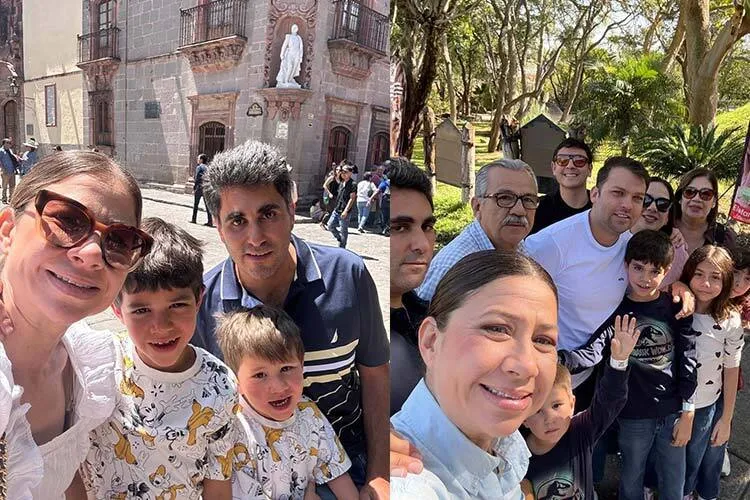
I love being around people. I’m always spending time with friends and family. I enjoy exercising, traveling, and being with my children. My husband and I are always planning our next adventure with the kids.
Have you found a balance between your personal life and your career as a researcher?
Women are often told that excelling professionally requires giving something up. I don’t see it that way.
I have two children, a very happy marriage, I enjoy traveling, and I have an active social life.
I think we need to challenge the idea that women must choose between science and motherhood. I don’t believe that’s true. Maybe you move at a different pace or become more intentional about your choices, but you don’t have to sacrifice part of your life.
And you certainly don’t have to do it alone. I have an incredible support system that allows me to be a mother, a researcher, a wife, a friend, a daughter, and a sister.
Understanding Herself
Five years ago, Cecilia’s oldest son was diagnosed with ADHD. Through that process, she began recognizing traits in herself that had been present since childhood.
Is that how you came to receive your own diagnosis?
I think many millennials are experiencing something similar. When our children are diagnosed, we start thinking, ‘This had to come from somewhere,’ and then we begin recognizing those same traits in ourselves.
Raising a neurodivergent child can be incredibly challenging. From the diagnosis to the therapies and specialist appointments, the process can be exhausting. In my case, it eventually led to depression, which is how I ended up seeing a psychiatrist.
Through my son’s therapy, I started noticing things that clicked for me. I’ve been receiving treatment for ADHD for about a year now, and it has completely changed my productivity. I’ve become much more efficient and focused.
And all of this happened thanks to my greatest teacher: my son.
Did you find this story interesting? Would you like to publish it? Contact our content editor to learn more at marianaleonm@tec.mx