

How do cancer cells cross blood vessels during metastasis? What changes in the brain’s protective barrier are linked to Alzheimer’s disease? These are some of the questions researchers hope to answer using organ-on-a-chip technology.
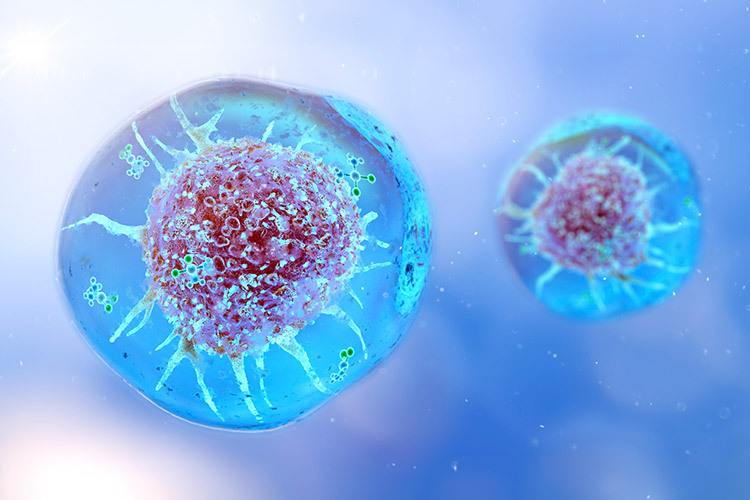
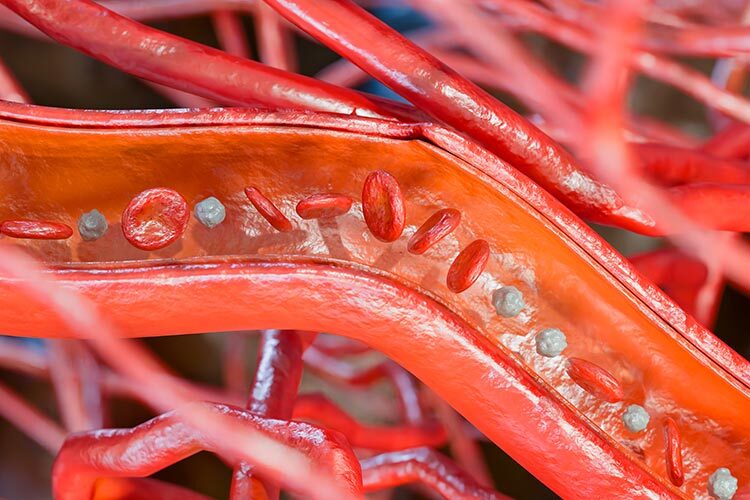
These tiny devices allow scientists to grow human cells under controlled laboratory conditions. Inside them, cells interact and organize themselves into structures that mimic those found in the human body, such as blood vessels, making it possible to study their behavior and natural properties.
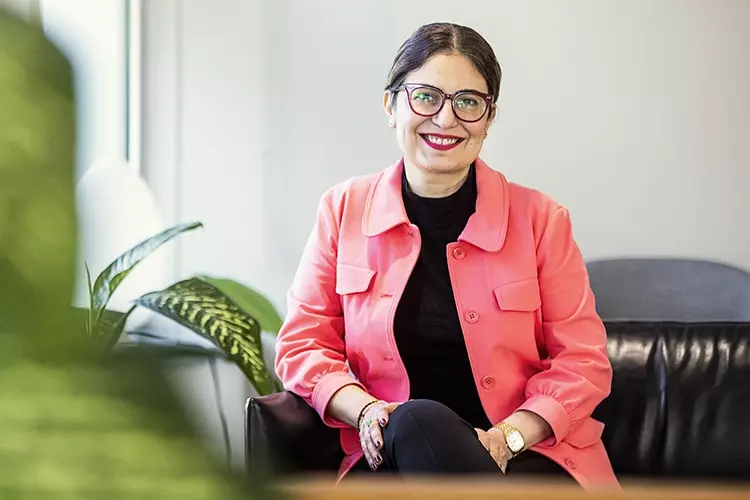
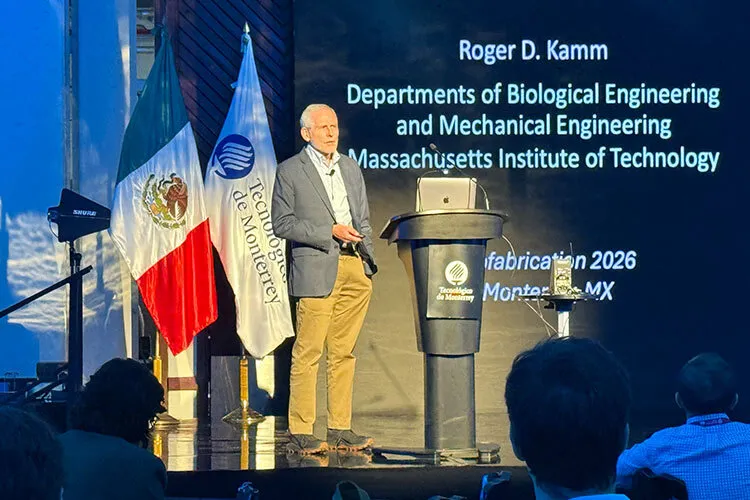
Roger Kamm, a researcher in the Department of Biological Engineering at the Massachusetts Institute of Technology (MIT), presented his team’s latest advances at the International Conference on Biofabrication 2026, held at Tecnológico de Monterrey.
“We let the cells do their own thing, interact with each other and develop the structures that are necessary to replicate what happens in vivo,” he explained.
According to Kamm, these models can be used by both academic researchers and pharmaceutical companies to test new treatments.
Recreating Human Tissues and Their Characteristics
To replicate the characteristics of human tissues, researchers use microfluidic technology, which controls the flow of liquids through tiny channels, while also harnessing natural processes such as cellular self-organization.
Kamm’s team is developing models in which human cells are placed inside a gel matrix that allows them to interact and organize themselves into three-dimensional structures.
The researcher showed a video documenting the first 48 hours of an experiment in which endothelial cells, which line the inside of blood vessels, began connecting with one another to form small vascular networks.
“You can see the endothelial cells are kind of reaching out, they find their neighbors, they form this nice three-dimensional structure,” he explained. “If we wait a few more days, these become fully perfusible.”
The team’s goal was not simply to create these structures, but also to keep them functioning for extended periods, allowing researchers to study different biological processes.
The researchers managed to keep the vascular networks intact for 51 days, until they decided to end the experiment. “The flow turns out to be very important, not just for providing nutrients to the cells and oxygenation, but also in terms of stabilization of the vascular networks.”
Studying the Spread of Cancer on Chips
One of the applications Kamm presented focuses on studying metastasis, the process by which cancer cells break away from a primary tumor and spread to other parts of the body.
Using these models, the team investigated how certain tumor cells enter blood vessels, travel through the bloodstream, and cross vessel walls to reach other tissues.
Kamm showed experiments in which cancer cells became trapped in capillaries, the smallest blood vessels in the body. While some managed to squeeze through the vessel walls, others were damaged by the forces generated by fluid flow.
In one example, a tumor cell extended part of its structure, latched onto the membrane surrounding the vessel, and created an opening to slip between two endothelial cells. Once the cancer cell had passed through, the gap closed again. Kamm explained that the entire process was captured on video over a four-hour period.
“We can observe this, we can quantify it, we can study it under various perturbation conditions, but we can do this all in vitro,” he emphasized.

Recreating Alzheimer’s-Related Changes on Chips
Another application developed by Kamm’s team focuses on studying Alzheimer’s disease. These models replicate key features of the blood-brain barrier, a structure that protects the brain and regulates the movement of substances between the bloodstream and brain tissue.
The researchers grew nerve cells carrying genetic alterations associated with Alzheimer’s and observed how they interacted with vascular networks created in the laboratory.
After four weeks, they found increased accumulation of beta-amyloid, a protein linked to the disease, both in the nerve tissue and around the blood vessels. They also observed that the barrier had become more permeable, meaning substances could pass through it more easily.
In a more recent version of the model, a single genetic alteration was enough to produce substantial differences. For example, permeability increased to more than twice that of the control model.
“We really didn’t expect to see phenotypic changes in the system with just the single mutation. But in fact we do. They’re very significant,” Kamm explained.
The researcher emphasized that these experiments make it possible to study how Alzheimer’s may affect the structures that protect the brain and investigate the mechanisms underlying the disease.
Recreating the Journey of Drugs on Chips
By replicating key features of human tissues, the organs-on-chips developed by Kamm’s team also offer an alternative for the pharmaceutical industry to test new drugs. At the same time, they could help reduce the need for animal testing.
“This has been motivated not only by the fact that we’d like to preserve the welfare of animals, but also that nonhuman models really are not very good predictors of human disease,” he noted.
For this ongoing research, the team created three models that replicate features of blood vessels, the lymphatic system, and the tissues surrounding cells. Using these models, researchers are studying how monoclonal antibodies, a type of medication used to treat various diseases, are absorbed when administered through injections under the skin, and how much of the drug ultimately reaches the bloodstream.
The results are combined with computational models and an artificial intelligence (AI) system designed to predict how much of a drug will reach the bloodstream.
Biofabrication 2026 Comes to Latin America for the First Time
The 2026 International Conference on Biofabrication is taking place November 2–6 at Tecnológico de Monterrey’s Monterrey campus. The event brings together researchers from around the world to share advances in biomaterials, biofabrication, and their applications in medicine and other industries.
This marks the first time the conference, organized by the International Society for Biofabrication (ISBF), has been held in Latin America. Grissel Trujillo and Mario Álvarez, researchers at Tec de Monterrey and co-chairs of the conference, emphasized the significance of welcoming this scientific community to Mexico.
“Progress in biofabrication depends not only on scientific excellence, but also on our ability to overcome barriers between disciplines, institutions, and countries,” said Jürgen Groll, president of the ISBF, during the opening ceremony. “I hope this gathering will advance biofabrication research and foster stronger ties between the ISBF and Latin America.”
Were you interested in this story? Do you want to publish it? Contact our content editor to learn more marianaleonm@tec.mx.