

Throughout history, viruses have been associated with infectious diseases, devastating pandemics, and millions of deaths. Yet despite the fear these tiny microorganisms inspire, life on Earth would not exist without them, as they play a vital role in maintaining the balance of ecosystems and even our own bodies.
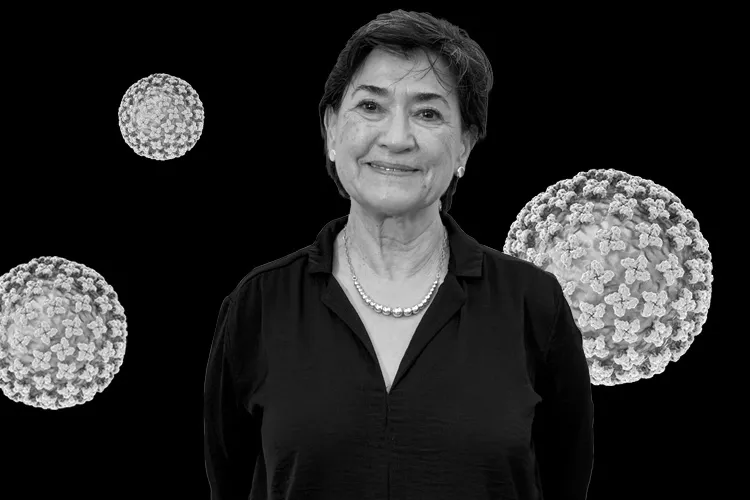
That was the message shared by Susana López Charretón, a virologist and researcher at the Institute of Biotechnology of the National Autonomous University of Mexico (UNAM) and a member of El Colegio Nacional, during her keynote lecture, The Fascinating World of Viruses.
“Viruses do more than just cause disease. They are essential components of the biosphere, with effects that can be beneficial, harmful, or neutral,” explained López Charretón, who also specializes in the cellular and molecular biology of rotavirus and astrovirus infections.
During the lecture, held as part of the 2026 Monterrey International Book Fair (FILMTY), organized by Tecnológico de Monterrey, López Charretón explored the relationship between viruses and other microorganisms that inhabit our bodies, including the bacteria that make up our microbiota.
She also highlighted advances in virology that have enabled scientists to harness the unique properties of viruses to develop new medical tools, including vaccines and cancer treatments.
The Nature of Viruses
The researcher described viruses as tiny microorganisms with a simple structure, also referring to them as obligate intracellular parasites because they cannot reproduce on their own and must enter a cell to hijack its machinery.
“They are minimalist structures, meaning they have only the bare essentials needed to carry out all their biological functions: a genome, which can be made of RNA or DNA; proteins that surround and protect that genome; and some viruses have lipids, while others do not,” she explained.
She also noted that viruses are measured in nanometers and that the cells they infect can be up to 10,000 times larger than they are. However, in recent years, scientists have also discovered giant viruses that are large enough to be seen under optical microscopes.
López Charretón added that viruses can infect virtually every type of living organism, from bacteria and fungi to plants, animals, and humans. Scientists have even discovered so-called virophages, viruses that can parasitize other viruses, meaning they depend on them to replicate.
Not All Viruses Are Harmful
Although people commonly associate viruses with diseases such as COVID-19 and Ebola, or mosquito-borne infections like Zika, not all viruses have harmful effects on humans or other organisms in nature. In fact, some have played a fundamental role in the evolution of living organisms and help maintain the balance of ecosystems.
For example, in mammals, certain genes inherited from ancient retroviruses gave rise to proteins called syncytins, which enable the cell fusion necessary for the formation and proper functioning of the placenta.
“In other words, we are mammals thanks to viral genes that made the formation of the placenta possible,” she told the audience.
Today, viruses also help maintain a healthy balance in the human gut microbiota. In this context, the researcher discussed bacteriophages, or simply phages, which are viruses that infect the bacteria making up this community of microorganisms. However, when the balance between bacteria and phages is disrupted, it can trigger changes that contribute to the development of certain diseases.
Viruses are also essential to maintaining the balance of entire ecosystems, including the oceans, which are home to vast numbers of viruses that infect bacteria and other marine microorganisms. In fact, these viruses help break down approximately 40% of these microorganisms every day, promoting the recycling of carbon and other nutrients used by phytoplankton, which in turn serve as a food source for many marine organisms.
“If we didn’t have phages in the ocean, it would become overrun with bacteria, and before long, oxygen levels would plummet, making it impossible for marine animals to survive,” she added.
Viruses as Tools for Medical Innovation
While viruses already play beneficial roles in living organisms and ecosystems, scientific and technological advances have also enabled researchers to harness their unique properties to develop medical innovations, including vaccines and therapies for treating a wide range of diseases.
“We can now manipulate viral genomes for medical purposes,” López Charretón emphasized. “Viruses can become highly valuable biotechnology platforms.”
Among the applications highlighted by the researcher were gene therapies, which use modified viruses to introduce or replace genes in cells; the development of vaccines, including some used against COVID-19; and cancer treatments that harness certain viruses capable of infecting and destroying cancer cells.
She also discussed the use of bacteriophages to fight infections caused by antibiotic-resistant bacteria, a problem that has become an increasingly serious concern in healthcare in recent years.
Other promising applications include genetic engineering, genome editing, and nanotechnology. In the latter field, she explained, scientists can harness the proteins that make up the outer shells of viruses to develop particles capable of delivering substances to specific targets.
Learning to Live with Viruses
In an interview with TecScience, López Charretón emphasized the importance of gaining a better understanding of viruses.
“It’s important to talk about viruses because they are part of our lives. There are very beneficial viruses that we need, but there are also those that cause disease. They are part of the ecology of our bodies, and we need to learn not just to coexist with them, but to live with them,” she said.
The lecture, held at Zambrano Hellion Hospital in collaboration with Tec de Monterrey’s School of Medicine and Health Sciences, was part of a series of events organized by El Colegio Nacional, the guest of honor at the 2026 Monterrey International Book Fair (FILMTY).
Did this story interest you? Would you like to publish it? Contact our content editor to learn more: marianaleonm@tec.mx