

According to Mexico’s National Health and Nutrition Survey (ENSANUT), roughly 13 million children and adolescents in the country are living with overweight or obesity. Despite their young age, this condition increases their risk of developing metabolic diseases such as type 2 diabetes.
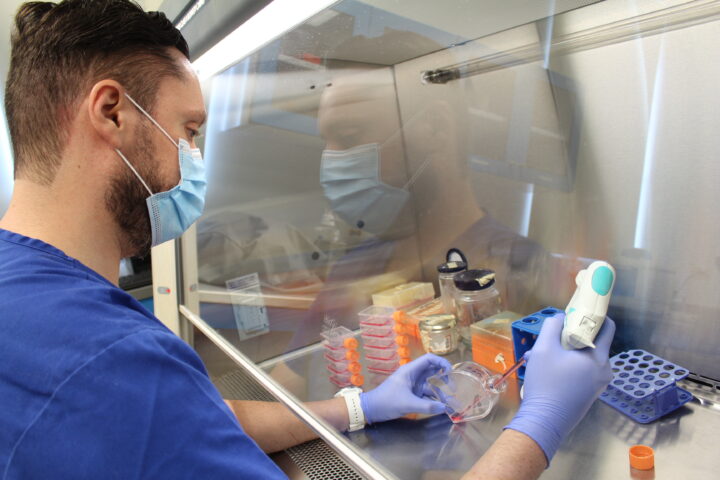
To address this challenge, researchers at Tecnológico de Monterrey are conducting studies to better understand what happens in the bodies of these patients at the molecular level. Their goal is to identify biological markers associated with these diseases and contribute to the development of healthier, more appropriate foods as part of a flagship project led by the Institute for Obesity Research (IOR).
Carmen Hernández, head of the IOR’s Food & Clinical Nutrition for Health Unit, explained this effort during the presentation of one of the institute’s four flagship projects, titled Towards Clinically Guided Food Design, at the 2026 International Conference on Obesity Research.
“We aspire to design foods guided by clinical practice and grounded in scientific evidence,” Hernández said, referring to the study being conducted by the unit she leads.
With that vision in mind, she noted, the team is developing projects aimed at gaining a deeper understanding of human health and the compounds that make up foods, bringing together disciplines such as nutrition, engineering, microbiology, health sciences, and data science.

Studying the Interaction of Biological Factors
The pediatric population has become a priority for this research group, the researcher noted, because children are at a critical stage of development, and their diet and lifestyle depend largely on the adults around them.
One of the studies involves analyzing a cohort of 60 Mexican children, 20 of whom have been diagnosed with type 2 diabetes, while others have metabolic syndrome. This condition is characterized by abnormalities such as insulin resistance, abdominal obesity, and elevated triglyceride levels, all of which increase the risk of developing cardiovascular disease and diabetes.
Through years of follow-up, researchers have been able to examine how different biological factors interact with one another—factors that have traditionally been studied in isolation.
Hernández explained that the project aims to characterize individuals using information about their genetics, diet, microbiota, and metabolism in order to gain a deeper understanding of disease. “What we are seeking is to characterize the human being.”

Searching for a Molecular Signature of Type 2 Diabetes in the Body
The team is investigating whether type 2 diabetes leaves a molecular signature in the body. To do so, researchers have analyzed molecules in patients’ blood samples using lipidomics, a field that studies the fats circulating throughout the body and can reveal biological patterns that are not detectable through conventional clinical tests.
Among the study’s findings, the researchers observed that children with type 2 diabetes and metabolic syndrome had lipid profiles that differed from those of healthy children. Several alterations were identified, including increased levels of certain potentially inflammatory molecules and decreased levels of others—such as plasmalogens—which have been linked to protective effects in glucose regulation, lipid oxidation, and inflammation.
The findings suggest that this disease is associated not only with elevated blood glucose levels and changes in body weight, but also with disruptions in multiple metabolic pathways—the chemical processes the body uses to convert nutrients and other molecules into energy and to carry out essential functions.
Clues Linking the Gut Microbiota to Metabolism
The team also analyzed the patients’ gut microbiota and compared it with the lipid profiles observed in their blood samples, uncovering associations between families of microorganisms and molecules linked to metabolic alterations.
“We have identified compounds—particularly within the lipidome, which has been a major focus of our work—that have been documented as being produced by microorganisms and that can also be detected in plasma.”
The researcher noted that, while these findings do not establish a cause-and-effect relationship, they do suggest an interaction between gut microorganisms and the biological processes observed in children with type 2 diabetes and metabolic syndrome.
“These are associations; we are not saying they are the cause, but at the very least, the possibility exists,” Hernández said.
She added that these findings open the door to new lines of research aimed at understanding how the microbiota may contribute to the biological processes associated with these diseases. Such studies help reveal how diet influences these metabolic pathways. Ultimately, this knowledge could support the development of foods tailored to the specific needs of different groups of patients.
Findings from the Metabolism of Healthy Children
Hernández noted that the team has also focused on learning from healthy children rather than studying disease alone. For example, researchers analyzed a separate cohort of physically active children to better understand what distinguishes a healthy metabolism.
In collaboration with TecSalud and the Center for Early Childhood, the researchers are examining lipid profiles obtained from blood samples, along with dietary habits, in children who participate in sports such as American football and flag football. The goal is to determine whether there are associations among diet, metabolism, other health indicators, and factors that influence childhood well-being.
As a preliminary finding, the team identified associations involving DGLA (dihomo-gamma-linolenic acid), an omega-6 metabolite linked to compounds that were also observed in the cohort of children with type 2 diabetes and metabolic syndrome. DGLA has also been associated with the consumption of foods and beverages high in sugar.
However, the researcher emphasized that these results should not be interpreted as a consequence of diet alone. As is the case with obesity and diabetes, metabolic health is shaped by multiple factors, including physical activity, environment, and everyday habits.
Another finding from the study was that physically active children showed lower levels of anxiety and depression on some of the questionnaires administered during the research. In this regard, Hernández believes that additional studies are needed both to confirm these results and to further explore ways of promoting better overall health during childhood.
In addition to studies involving pediatric patients, Hernández highlighted that the unit has also participated in research on the characterization and chemical composition of various foods.
“We are seeking to connect the dots, working alongside clinicians and researchers from different disciplines so that food design is guided by healthcare professionals and supported by scientific evidence that allows us to identify molecules and compounds that go beyond what we already know about nutrition.”
Did you find this story interesting? Would you like to publish it? Contact our content editor to learn more: marianaleonm@tec.mx